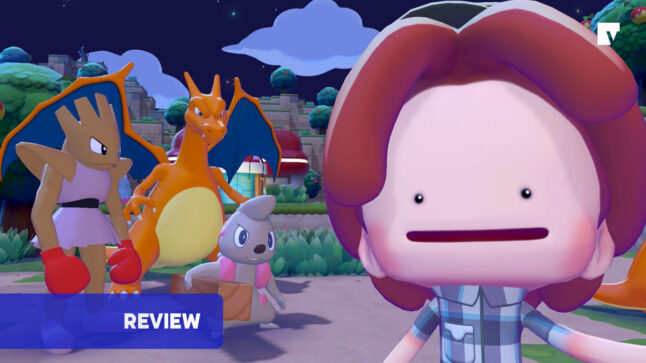

My experience with Pokémon Pokopia is not how most players will play it. This is a game designed to be played bit-by-bit, slowly expanding and growing over time — not quite as slowly as something like Animal Crossing, but over a period of weeks and months, not days. It’s not intended for the player to speedrun through to the credits in under a week, but nevertheless that is what I did, and I still enjoyed it very much. I can’t speak to how that experience feels if played at the game’s own pace, and this review is based on my own experiences and not the experience that could have been. I imagine it’s a better experience, but it speaks to the quality of the game that even playing it wrong, at breakneck pace, is an absolute joy.
Pokopia has you taking the role of an inquisitive and helpful Ditto in a ruined, desolate Kanto region. Humans are missing from the region – maybe even missing from the world – and most Pokémon are in hiding. After meeting up with a well-read Tangrowth, you decide the best course of action is to make the land more hospitable to Pokémon, and in doing so hopefully attract humans, who famously love Pokémon.
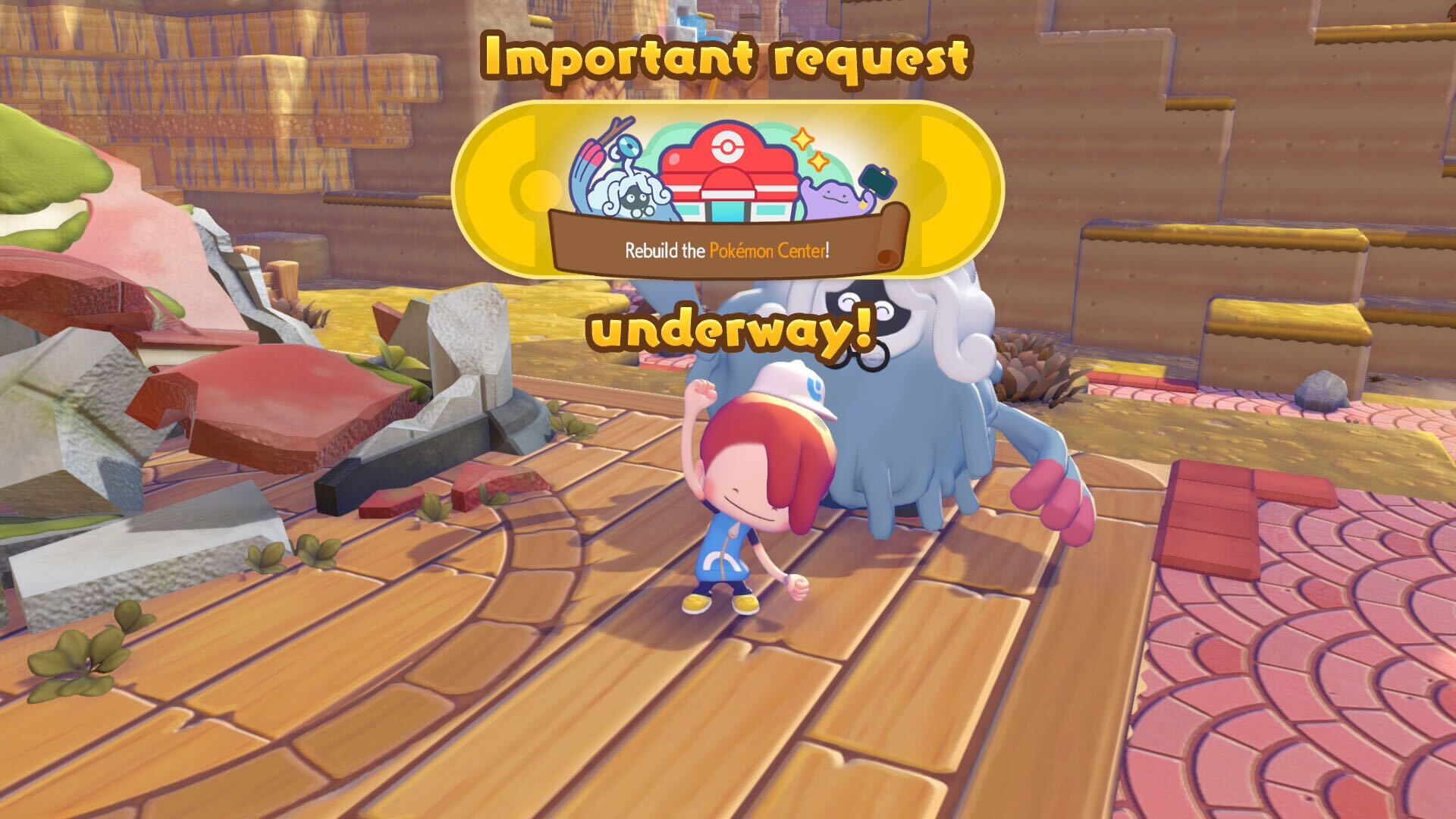
That’s the key premise of the game, but I want to talk a little bit more about the choice of the Kanto region as a setting. I think it’s an absolutely fascinating choice, despite my general dislike of Kanto over the years. That dislike comes largely because we’ve seen the same (or at least very similar) Kanto across multiple generations, and it felt like the region was off-limits for any kind of growth or forward momentum. Kanto is Kanto, as it always has been, and always will be.
Pokopia’s Kanto isn’t that. It’s broken and messy, and almost beyond recognition if not for a few key landmarks that really stand out as identifiers for the region. It’s a region long past its prime, with its glory days come and gone. And despite growing tired of Kanto’s constant presence in Pokémon media, I became a little emotional exploring the ruins of the region we’ve spent so much time in over the last 30 years.
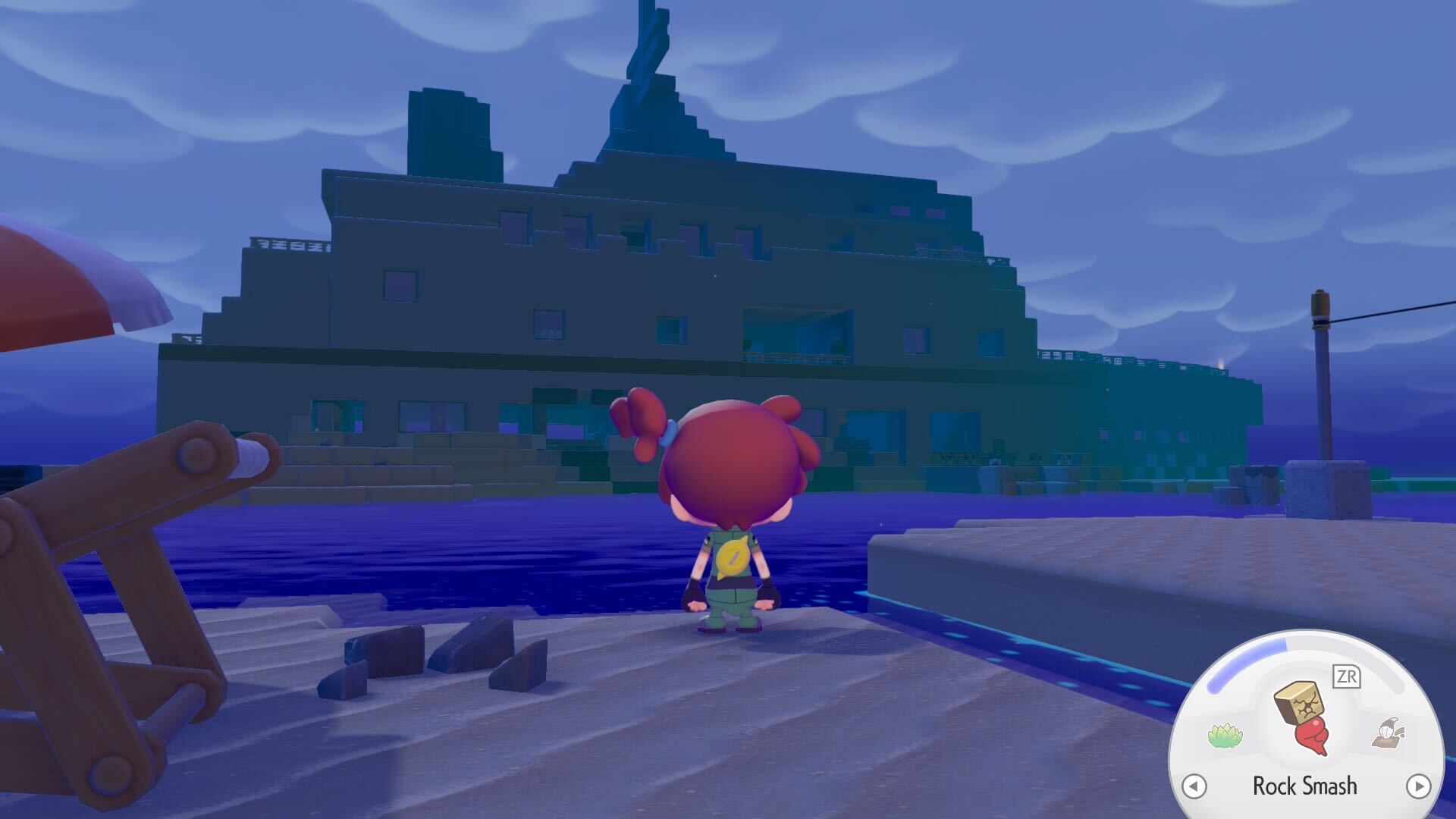
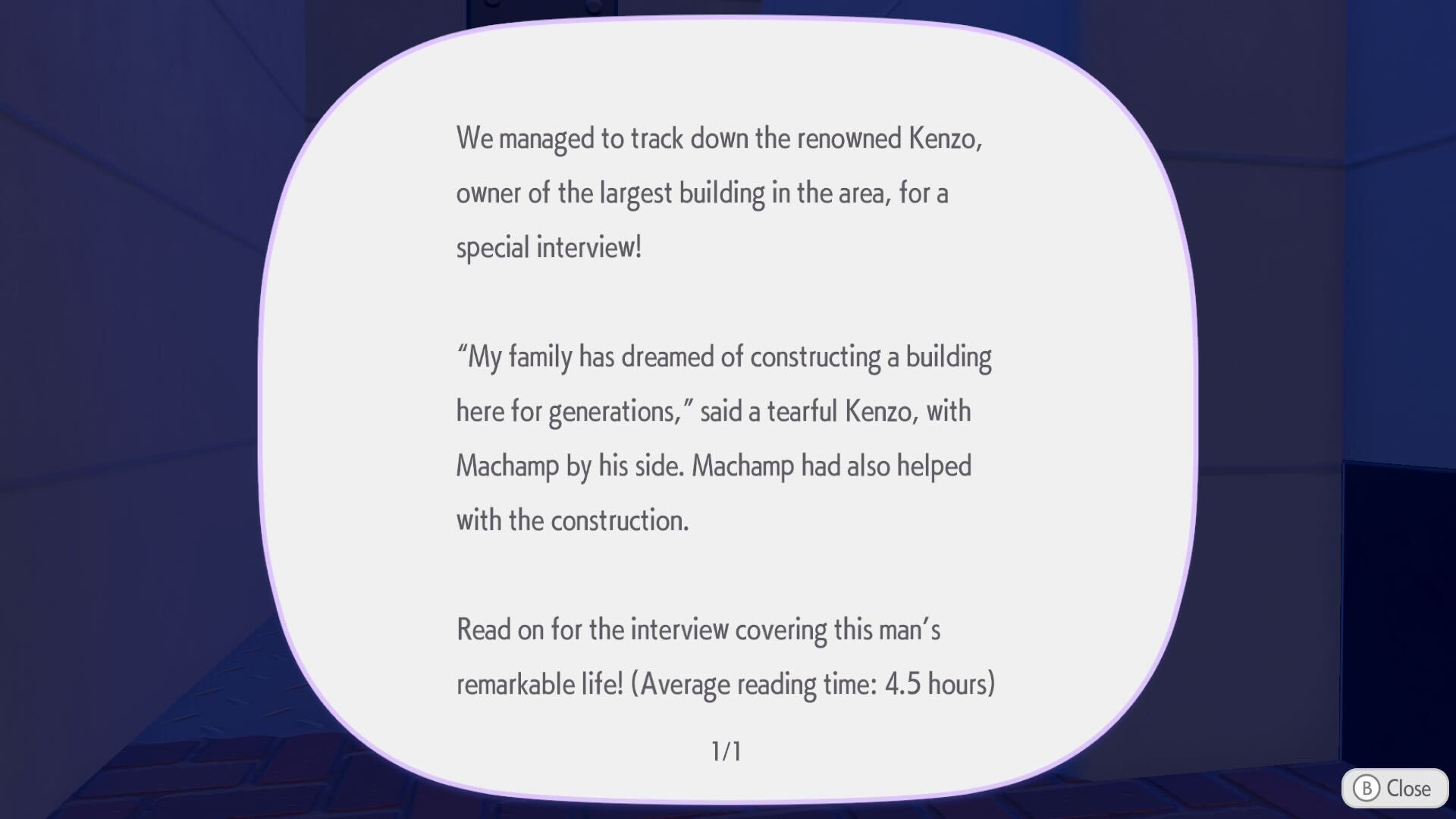
Much of my time in Pokopia was spent exploring these ruins. Scattered throughout the world are notes, logs, newspapers, and journals from the region that came before. There are interviews with gym leaders like Lt. Surge, a news story about the tallest building in Vermilion and the Machamp that built it, notes about the mysteries of Mt. Moon. These aren’t just nostalgia-bait references meant to tug on the heartstrings of thirty-somethings that grew up playing Pokémon Red and Blue — though they are that, in part. But they’re also signs of genuine respect for the region, and the franchise as a whole. For the first time in Pokémon’s history, we get to see what happened to Kanto after the events in Gold and Silver. We see evidence of growth, of a changed region that moved on from the image that Game Freak has spent so long refining and enshrining.
It feels monumental to see the region like this, in a far off future with its best days behind it. The events of Pokopia might not be canon, but they might be. All we see here may have happened, and may happen in the main games’ future… or it’s just a one-off, “what if?” story in a spinoff that will never be revisited. I don’t think it matters which of these is true. What matters is that, for the first time in 30 years, we get to see a depth to the Pokémon world that until now had felt impossible. And using the Kanto region, which many of us have revisited countless times over the decades (and might be doing so again right now with FireRed and LeafGreen), is an inspired move. It steeps itself in familiarity to show players that this world is lived in, that it has its history both before and after the lens we view it through in the main series games.
But Pokopia isn’t just about looking to the past. It’s about creating a better future. The glory days of Kanto may be far behind us, but the land, ruined as it may be, still has worth. It can still be a home for Pokémon and people alike, as long as someone is willing to put in the work and rebuild it. And that’s our job, as a Ditto transformed into a human-like creature that’s capable of transforming further to complete a wide variety of tasks.
The primary gameplay loop of Pokopia sees you creating habitats for Pokémon that they want to live in. You can organise specific items and environmental features into specific configurations to lure Pokémon back and have them join your town, and your rebuilding efforts. There are dozens of configurations, and while some are quite simple – four grass tiles is usually a good bet for a decent handful of Pokémon – others require complex materials and configurations that aren’t quite as easy to put together.
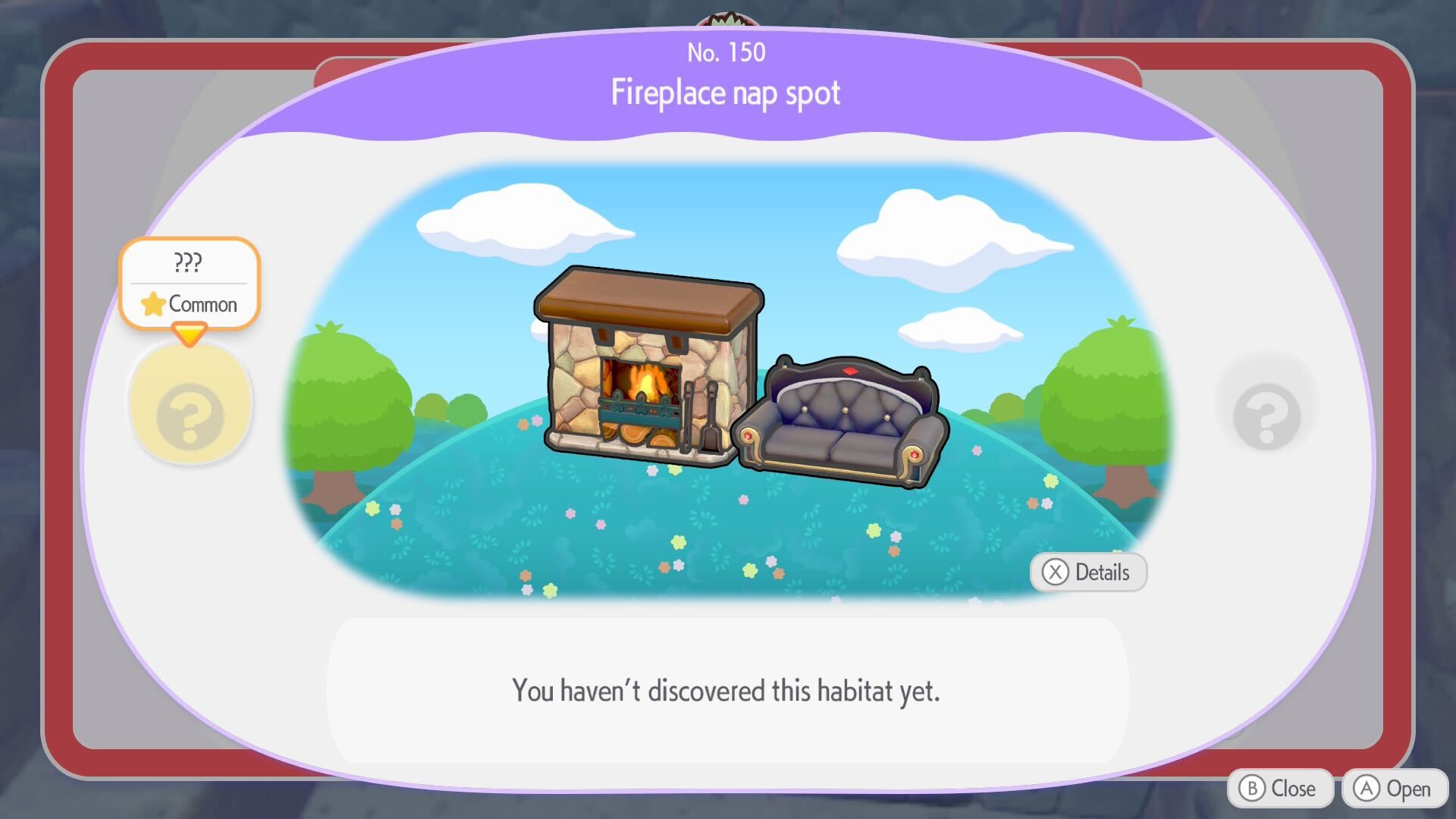
Each Pokémon you recruit to your little village has its own personality, and its own set of skills. A Fire-type Pokémon can usually turn clay into bricks, or heat up a smelter to turn ore into ingots. Electric-type Pokémon can help power machines, and Water-type Pokémon can help clean up sludge. And Psychic-type Pokémon can allegedly teleport you to other Pokémon, though I’ve not figured out how to get one to do it.
But Pokémon have their own wants and needs, too. Trapinch, for example, hates moisture – he’s a little sandy guy who loves the dry desert, after all – so lowering the humidity surrounding his habitat makes him happy. But what if his habitat is next to a Froaky, who loves moisture in the air? There are a few different solutions for this balancing act. You can carefully plan out your environments, making sure their native environments are logical and sensible next to each other. That’s certainly one option. You could also build elaborate homes for each Pokémon, specific to their tastes, then move them into those homes. Another great option. And then you can construct crude, tiny, Soviet-style panel buildings to cram four Pokémon with similar tastes into, so you only have to adjust the environment once instead of four times. I won’t say which one I did, but the important thing is that my Pokémon are all legally happy according to the rules of the game.
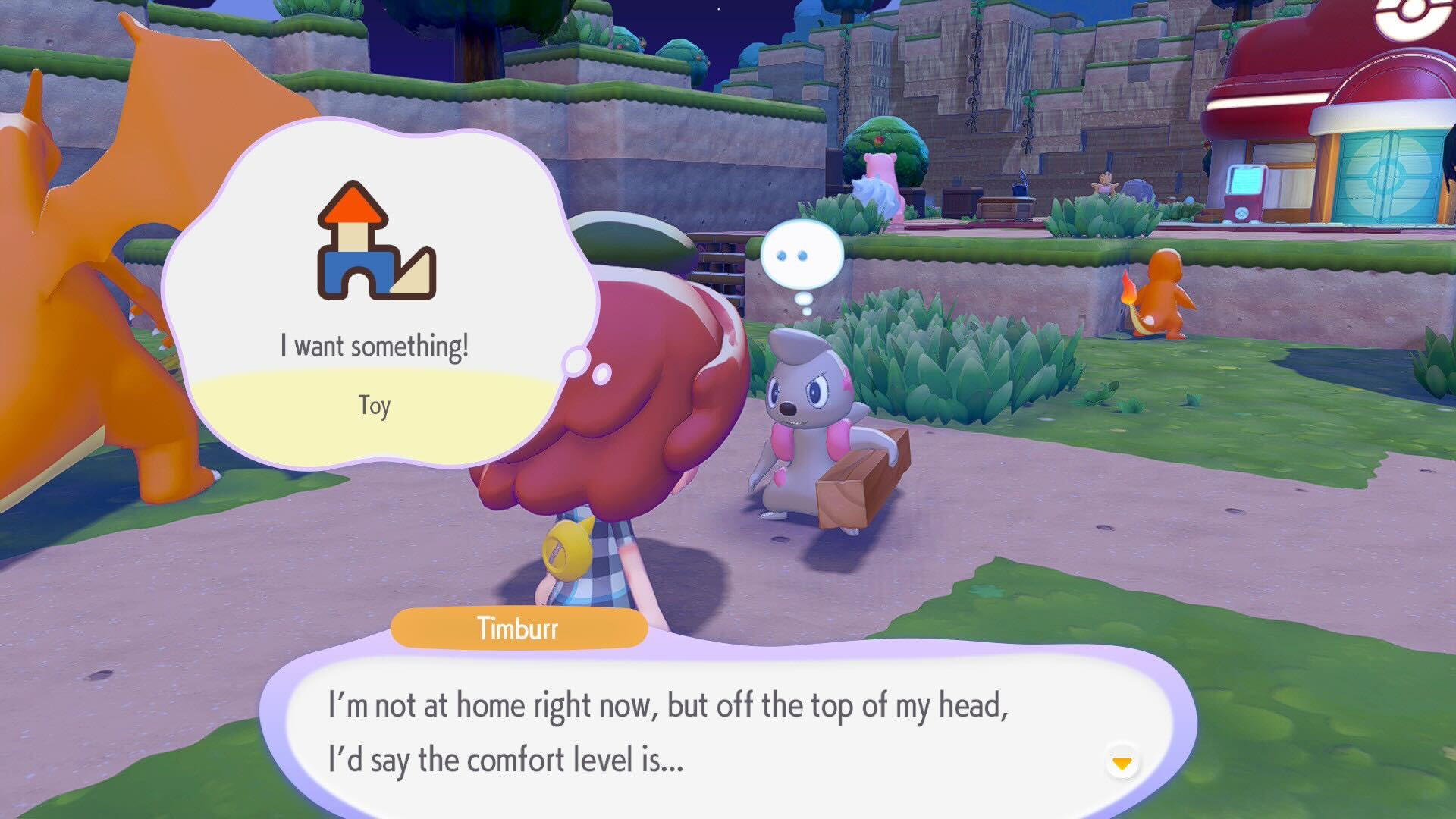
Some Pokémon are awfully picky, though. A particularly troublesome Gardevoir, for example, wanted her home to be brighter, and would not stop asking for more light until her home was practically made of streetlamps. Having unhappy Pokémon doesn’t prevent you from doing anything, exactly, but making your Pokémon happy improves the environment level, which unlocks more items to craft and, sometimes, new story options. So while that Gardevoir was, in my opinion, far too pushy about having more light, I couldn’t let her request go ignored. I dutifully built a windmill so I could power more electric lamps, and I filled her home with them. Then, she was happy.
Over time, I came to rely on certain Pokémon for specific tasks. Magmar was my go-to for smelting ore, Piplup became my main man for cleaning up sludge, and Rookidee was always around when I wanted wood turned into lumber. I started to develop favourites, reliable villagers and coworkers in this digital wasteland who I knew I could rely on. Any other Pokémon with the same skills could theoretically do the same job, but even as my villages grew in population this core group stuck with me and did what needed to be done.
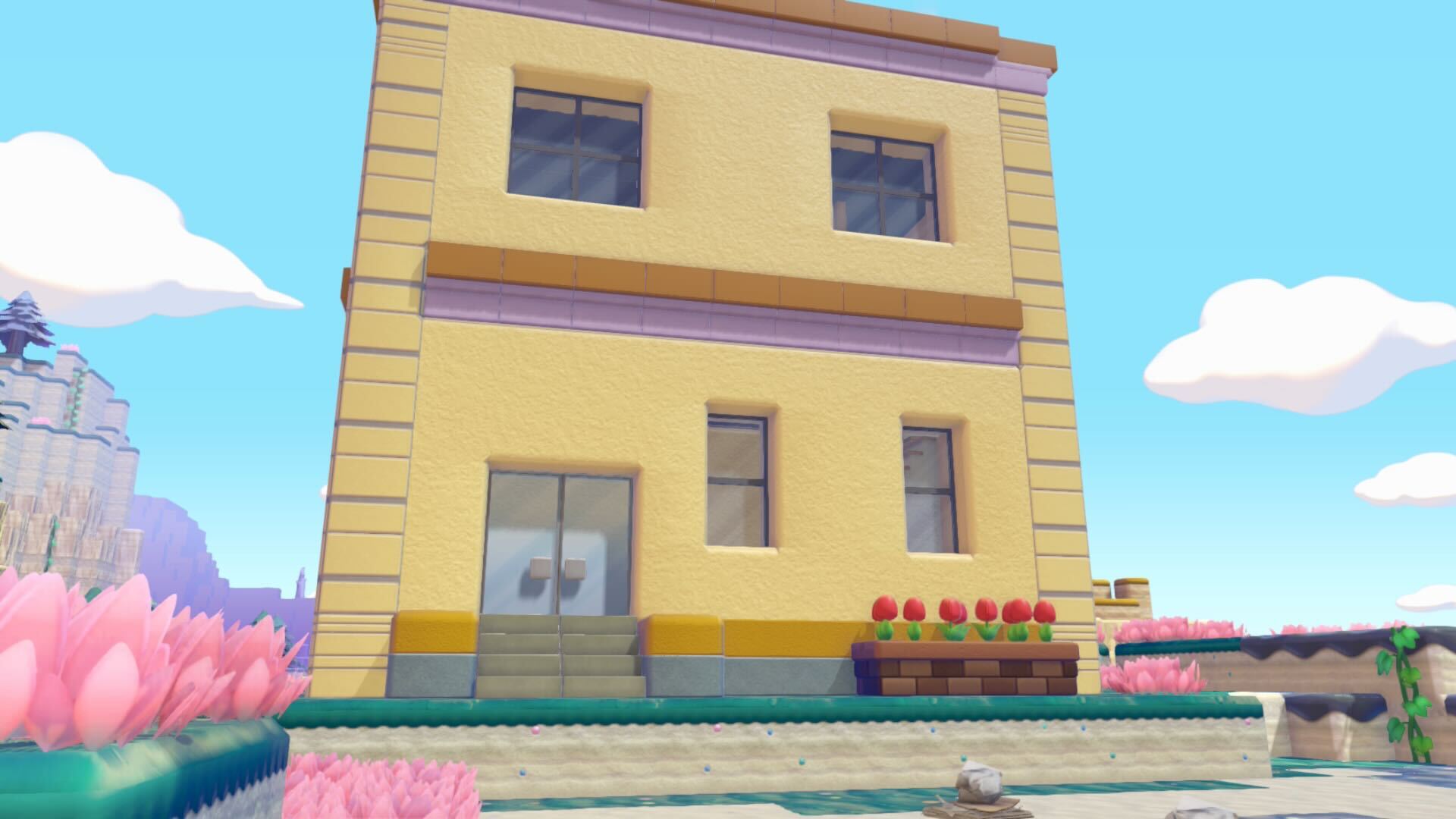
Story progression follows some fairly straightforward beats. You get to a new town, you meet some of the Pokémon in that area, and you start working towards a goal that requires you to recruit Pokémon, make them happy, and work with them. Sometimes that requires mining a lot of ore, other times it might involve farming a lot of food, or gathering lots of Pokémon to engage in big construction projects.
Half the time – near the start and near the end of the main story – you’ll be working on one project in one city at a time. But in the middle, that’s where the good stuff is. You have two cities to tend to, with two big projects to work towards, and that freedom helps a lot. When mining in one city is getting a little frustrating or boring, you can switch over to electrifying another. As long as you’re making progress, it doesn’t matter much which project you’re working towards. That’s something that, I imagine, would likely get even better when playing the game at a slower pace, but even at the relatively rapid pace I progressed through the game, I liked being able to switch back and forth at my leisure.
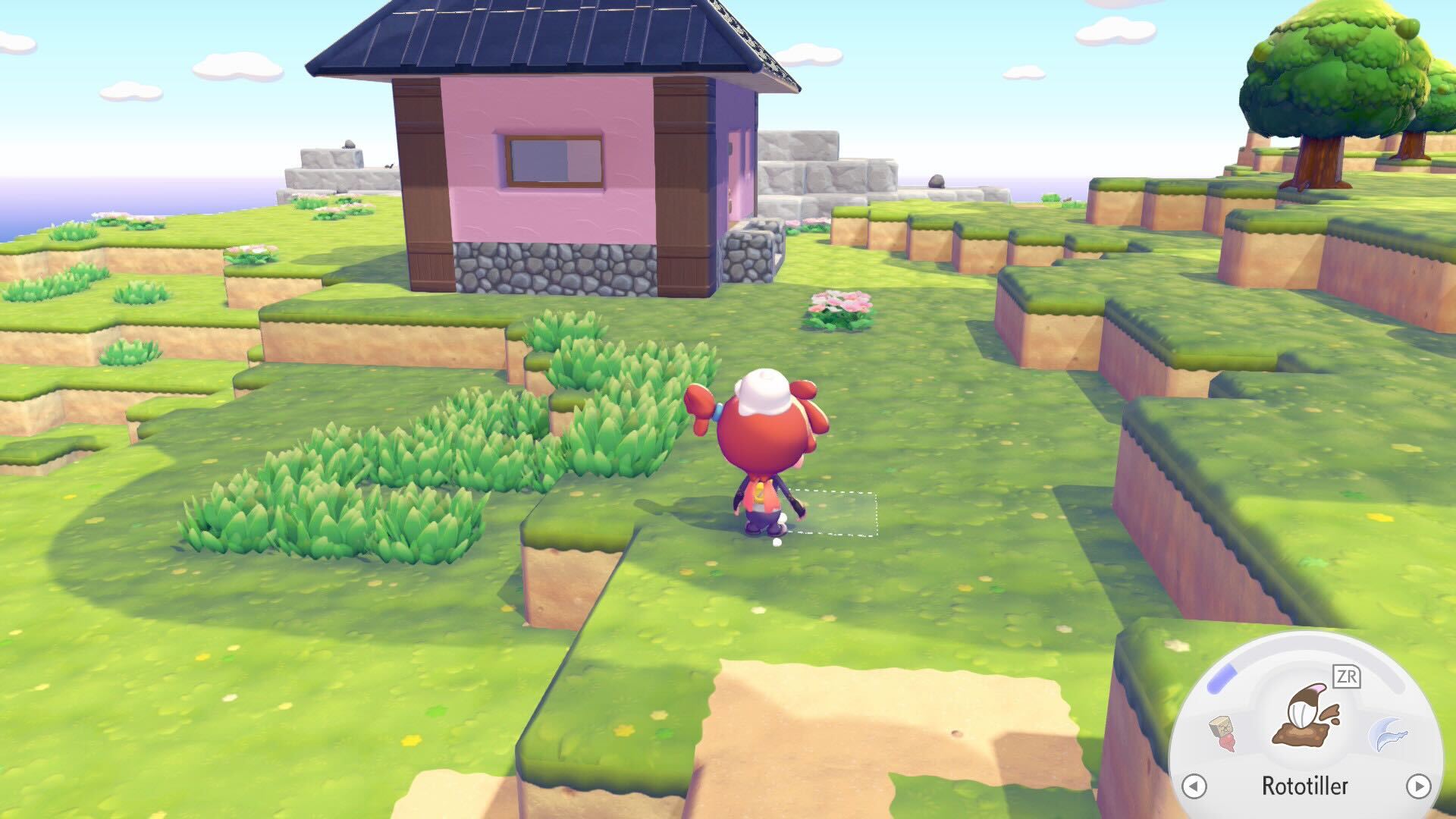
All of these tasks take place in a game world that takes a lot from a few similar games. There are influences from Animal Crossing, of course, with villager management and town improvement, and the Minecraft-style cube world, mining, building, and farming inspiration is as evident here as it was in Dragon Quest Builders 2 — another game developed by Koei Tecmo, like Pokopia. It never feels like a “clone” of any of those games, though. Sure, it borrows a few of their composite pieces, but Pokopia feels very much like its own thing when viewed as a whole.
It’s also very distinctly different from most Pokémon games – and from many of those games mentioned above – in that there’s no combat at all. You’ll never take damage, never fire off an attack at another monster to gain experience or level up. You learn new skills from your Pokémon villagers instead, and what conflict exists isn’t between Pokémon, but instead between those Pokémon and their harsh environment, or the lofty ambitions they seek. It doesn’t feel like there’s anything missing, though, with the omission of combat, and if anything, it feels better for not having it.
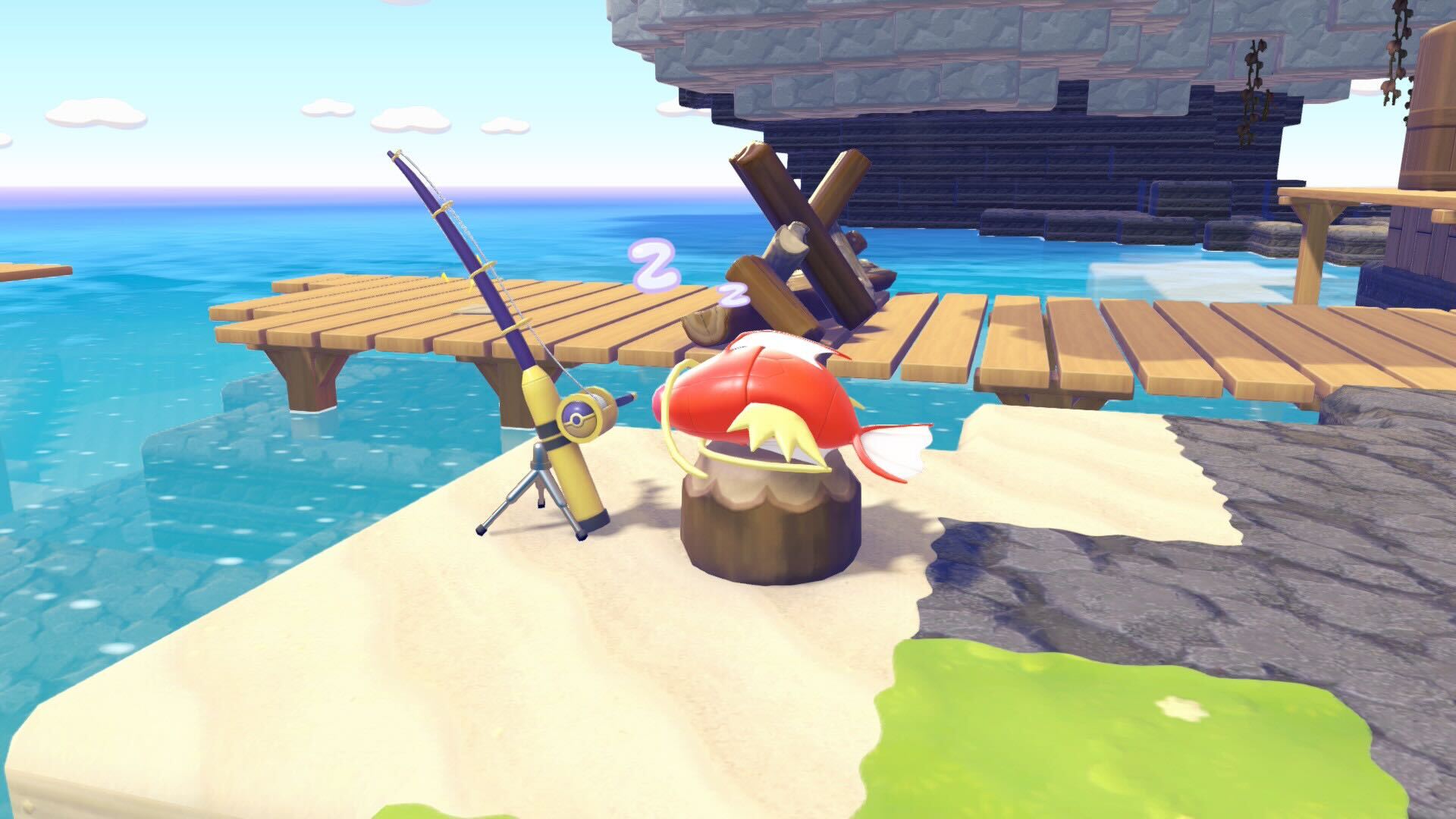
With all that said, I do feel there are a couple of minor missteps from time to time. Some Pokémon feel less like unique additions to your team and more like copies of other Pokémon. What is the difference between a Torchic and a Cyndaquil if both can power a smelter exactly the same? Sure, they have different personalities, and slightly different housing wants, but the only functional difference is that one of them is required for the story, and the other a random spawn. I know that’s kind of missing the point – these are villagers and friends, not just tools – but more could have been done to make them feel a little bit more unique. If a Quilava made bricks faster than a Cyndaquil, then I could see the value of having both. It doesn’t, though, so what I’m left with is two flaming mice that serve the same role and have almost the same housing needs.
Some of the truly unique Pokémon, like Peakychu, a Pikachu that’s lost its electric charge and become pale, and Chef Dente, a Greedent with a penchant for cooking, fare better in that regard, but others feel like set dressing more than anything else. DJ Rotom is little more than a CD player that hovers around, and Mosslax – one of my favourite designs of the unique Pokémon – is barely present throughout the story, save for a small questline that I had already technically completed before I’d even met the moss-covered Snorlax. That’s a little disappointing, in all honesty, though maybe there’s more Mosslax in parts of the game that I just haven’t seen yet.
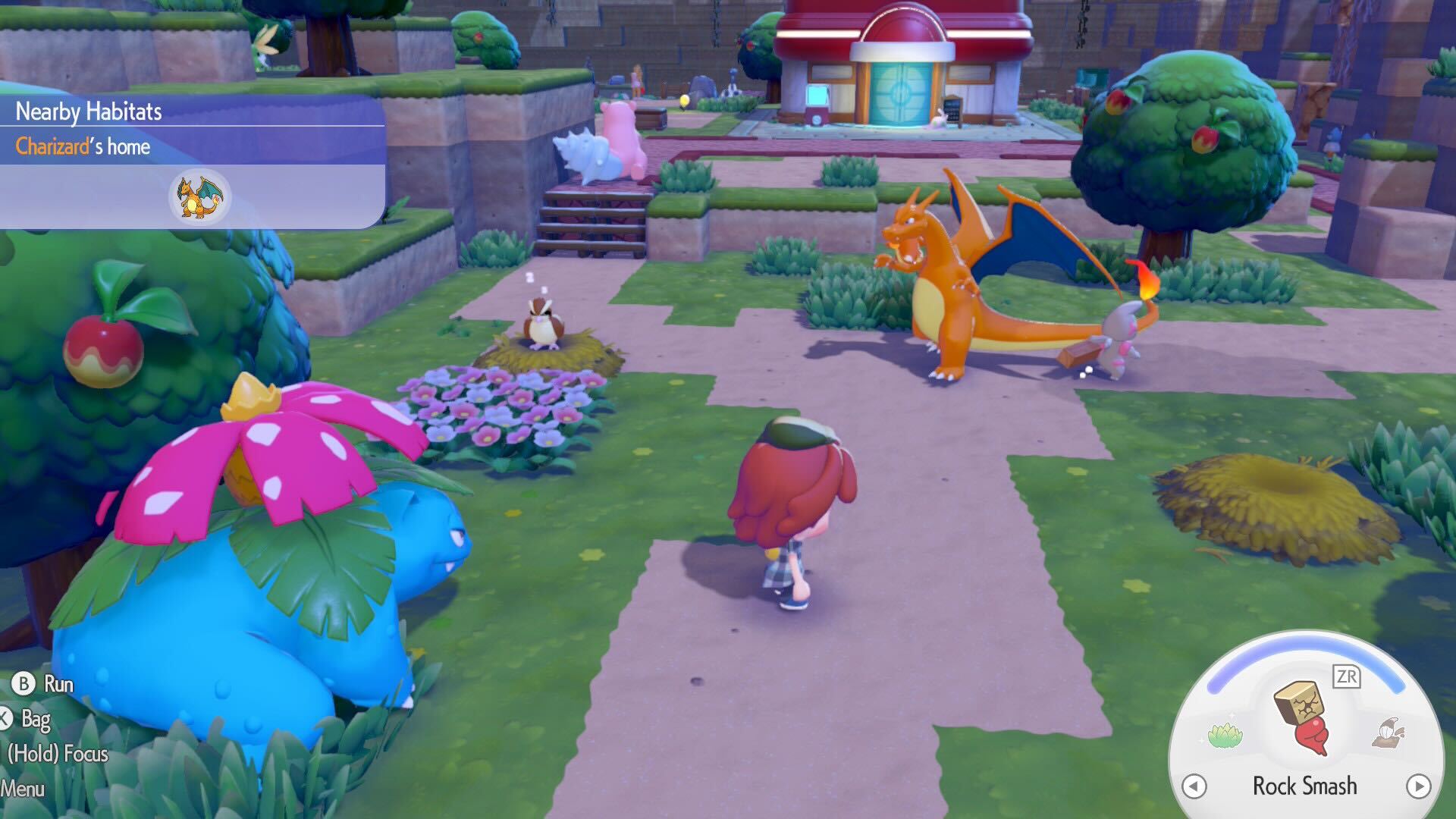
Despite those missteps, it’s hard not to be charmed constantly by Pokopia. Ditto is a silly, enjoyable character to headline a game, with its goofy grin and body horror transformations leading to some very fun slapstick comedy, intentional or otherwise. The writing is charming and funny, the art style is gorgeous – another thing that feels somewhat similar to Dragon Quest Builders 2 – and it looks and runs great in both handheld and docked modes.
The music and sound design is wonderfully handled, too. There are a lot of classic Pokémon tracks and sounds that get remixed into a lovely mix of Breath of the Wild-style ambient music and much more present “adventuring” tracks. Much like its representation of Kanto, Pokopia’s reverence and care for Pokémon music is lovely to see, and when a seemingly original track pivots into a familiar riff it’s hard not to smile.
Pokémon Pokopia is a surprisingly thoughtful love letter to the Kanto region, and the Pokémon world as a whole, wrapped up in delightful, cosy sandbox gameplay. It gracefully walks the line between familiar and fresh at every point, taking few missteps along the way and delivering one of the best Pokémon spinoffs in decades.
Rating: 4.5/5


Comments