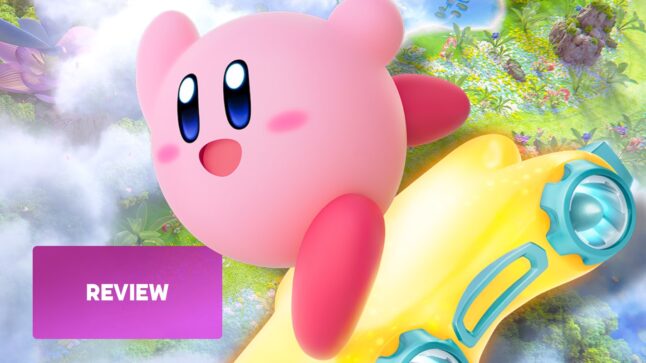

I have fairly limited experience with Kirby Air Ride on the Nintendo GameCube. I remember playing a few games every now and then with my friends when visiting their homes in my youth, but the game was never open for more than 15 minutes or so before we moved onto something else. Kirby Air Riders is a second chance to revisit that concept, breathing new life into a game that never quite landed.
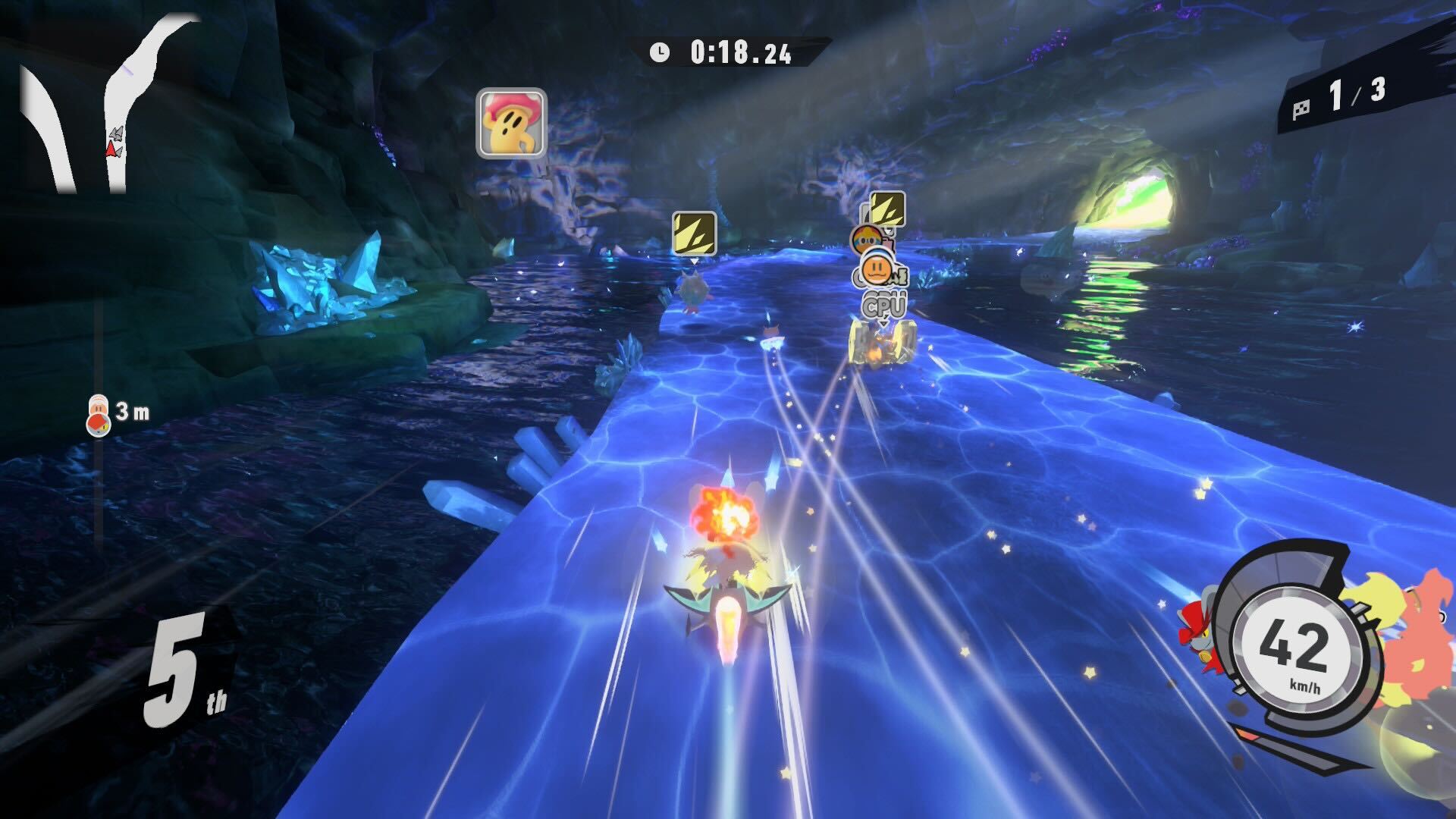
Kirby Air Riders is broken up into half a dozen or so different game modes: Air Ride, Top Ride, City Trial, Road Trip, and Lessons. That last one is the simplest – it’s just a series of tutorial missions that teach you most of what you’d need to know mechanically – but the others are all a bit more involved.
Air Ride is probably the most straightforward of the game modes. It’s essentially just a race mode, where you compete in a few laps around a selected track. There are a few different submodes here, like a time attack mode where you try to get the fastest time, or a free run mode where you can essentially practice, but for the most part if you just want to jump in and race, Air Ride gets the job done.
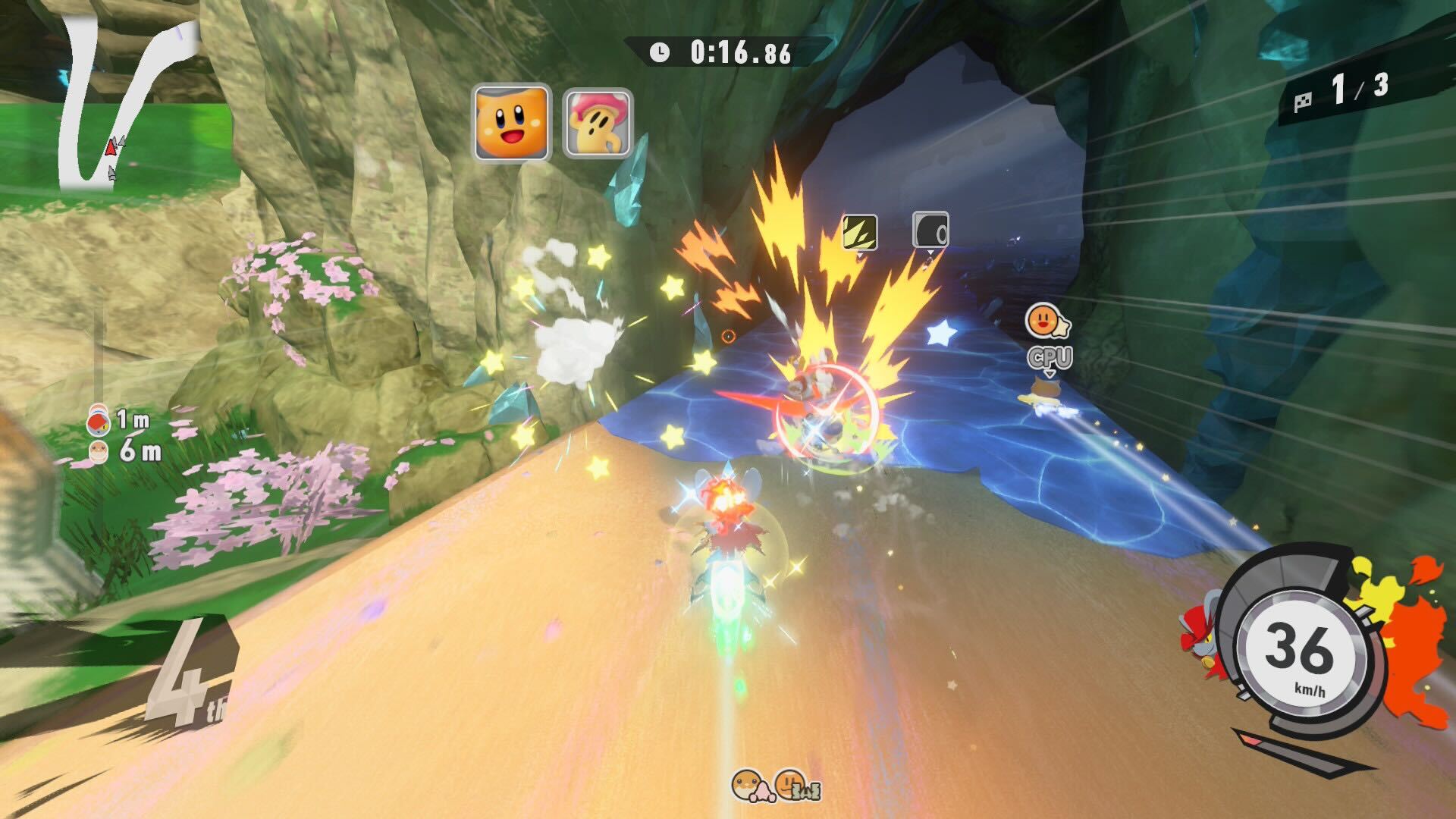
Racing doesn’t quite reach the depths of something like Mario Kart, although mechanically and structurally it’s not that dissimilar, but all of the courses, both new and returning, are quite good-looking and fun to race on. It definitely has the same pick-up-and-play vibe that Mario Kart does, though, and I could see myself breaking it out at a family gathering or a party… after a bit of explanation of the controls and vehicle options. It’s not the most intuitive game out of the box, but it doesn’t take long to get up to speed.
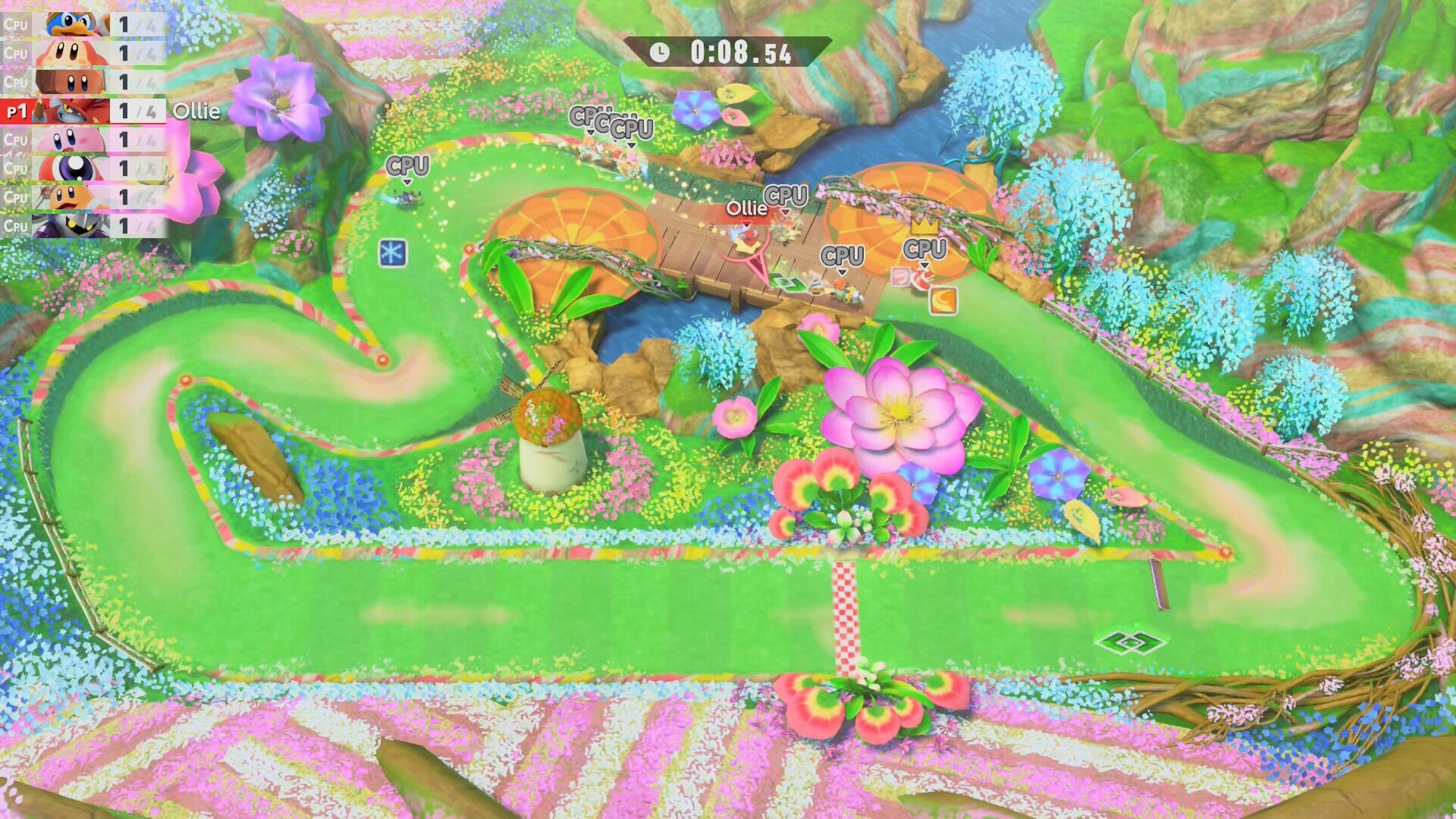
Top Ride is very similar to Air Ride, but it takes place on much shorter tracks viewed from above, giving it a Micro Machines kind of look and feel. It’s utterly chaotic, but also much simpler to get a grasp on in multiplayer, so it’s a guaranteed party hit, especially when you ramp the items up in the customisable rules. Each match only takes a couple minutes at the most, so it’s super easy to jump into a quick match.
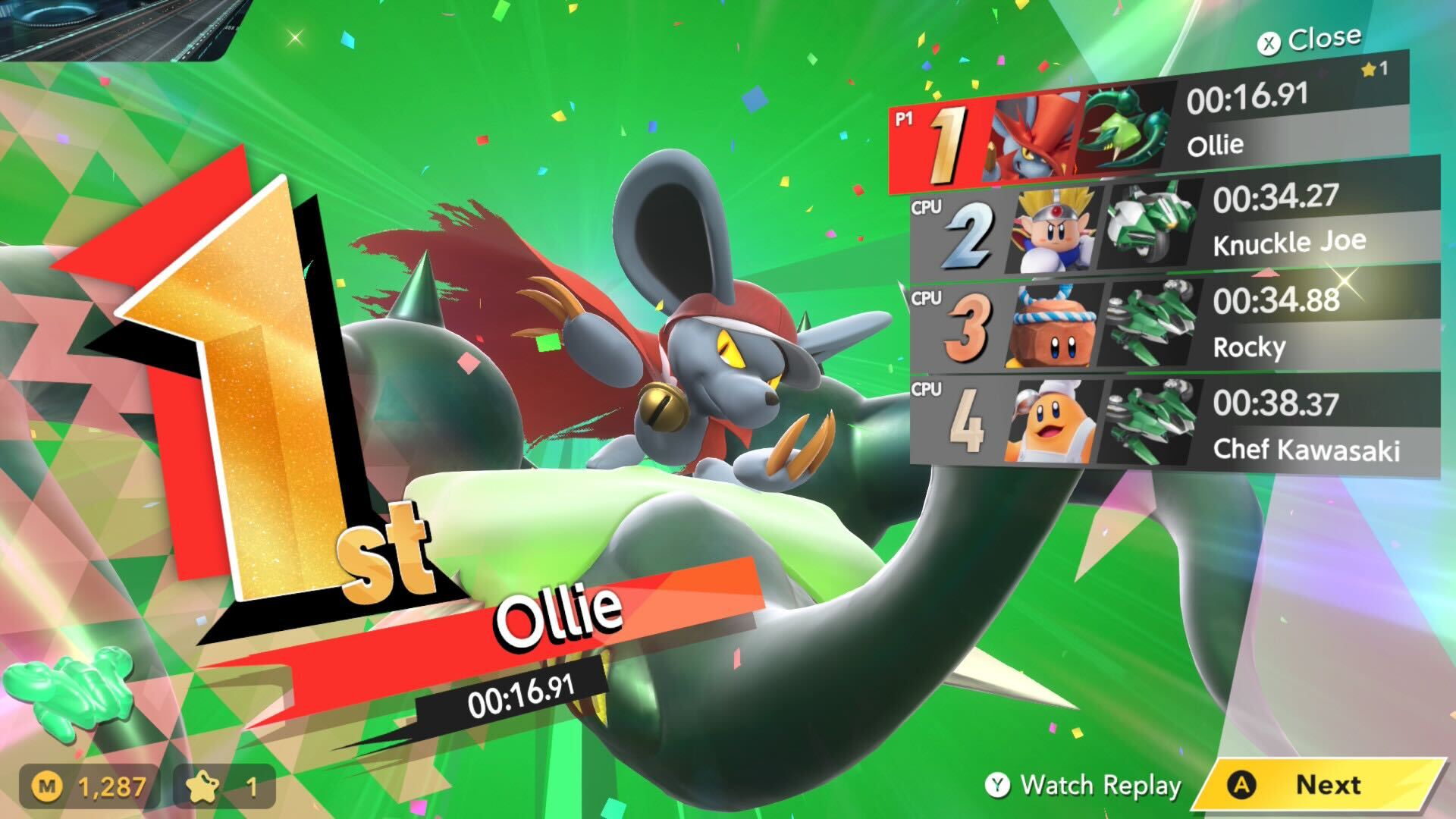
The last two game modes, City Trial and Road Trip, are where the meat of the experience lies. City Trial is best described as a chaotic shemozzle, where a bunch of players – either real or CPU – get thrown into a small arena-like map, where they smash around and try to collect upgrades to things like speed, gliding ability, vehicles themselves, and attack power. This goes on for five minutes, which is a lot longer than you’d think, and it ramps up the chaos as time goes on, with random world events suddenly speeding everyone up, or giving everyone powerful upgrades.
It’s hard to overstate just how chaotic this can get. I’ve had matches that, barely a minute in, turned into an unreadable mess, with everybody traveling at 5x speed, speed-boosting teleportals littering the map, and giant spike balls raining from the sky. It was a hot mess of a match, where I had basically no control over where I was going or what I was doing, so for the next four minutes I was just holding forward and hoping I was collecting anything important.
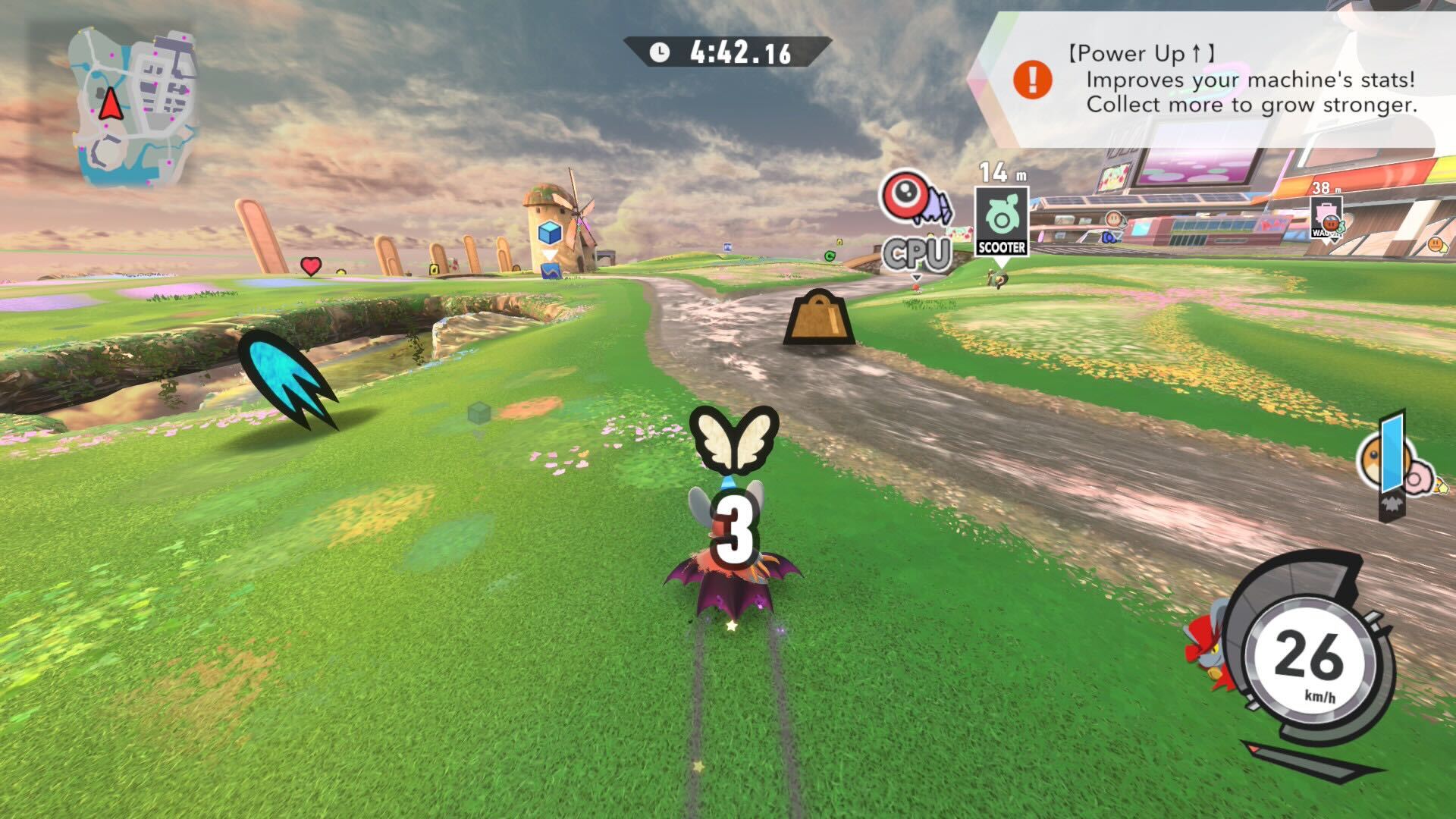
Once those chaotic five minutes are up, players vote on a minigame to compete in, which I think is by far the most interesting part of City Trial. There are dozens of minigames, from straightforward races to elimination races, melee brawls, and even gliding challenges, and not every build is going to be suitable for every minigame. If you’ve specced hard into being a bulky, combat-focused brawler, you’re probably going to do terribly in a gliding challenge, so you have to thread the needle and find a build that’s good at one particular thing but not terrible at others. You also have to keep an eye on your opponents to see what they’re working towards, either to try and block them out when selecting a minigame or to adapt your strategy to fit what everyone else is doing. That’s easier said than done when everything is chaotic as it is, but it’s a very fun concept that’s executed mostly well.
My biggest problem with City Trial is just how quickly everything can turn to dust, and that mostly comes down to legendary machines. These extremely fast and powerful vehicles are broken up into parts, usually three parts, and you can collect them over the course of the match, either by finding them in the arena or knocking them out of your opponents’ inventories. If you’re lucky enough to get all three parts and make yourself a legendary machine, you’re essentially guaranteed a victory… and if your opponent is the lucky one instead, you’re more or less screwed. They don’t show up in every match as far as I can tell, but they’re common enough that it can get a bit frustrating, as it removes any kind of strategy — arguably the best part of the game mode.
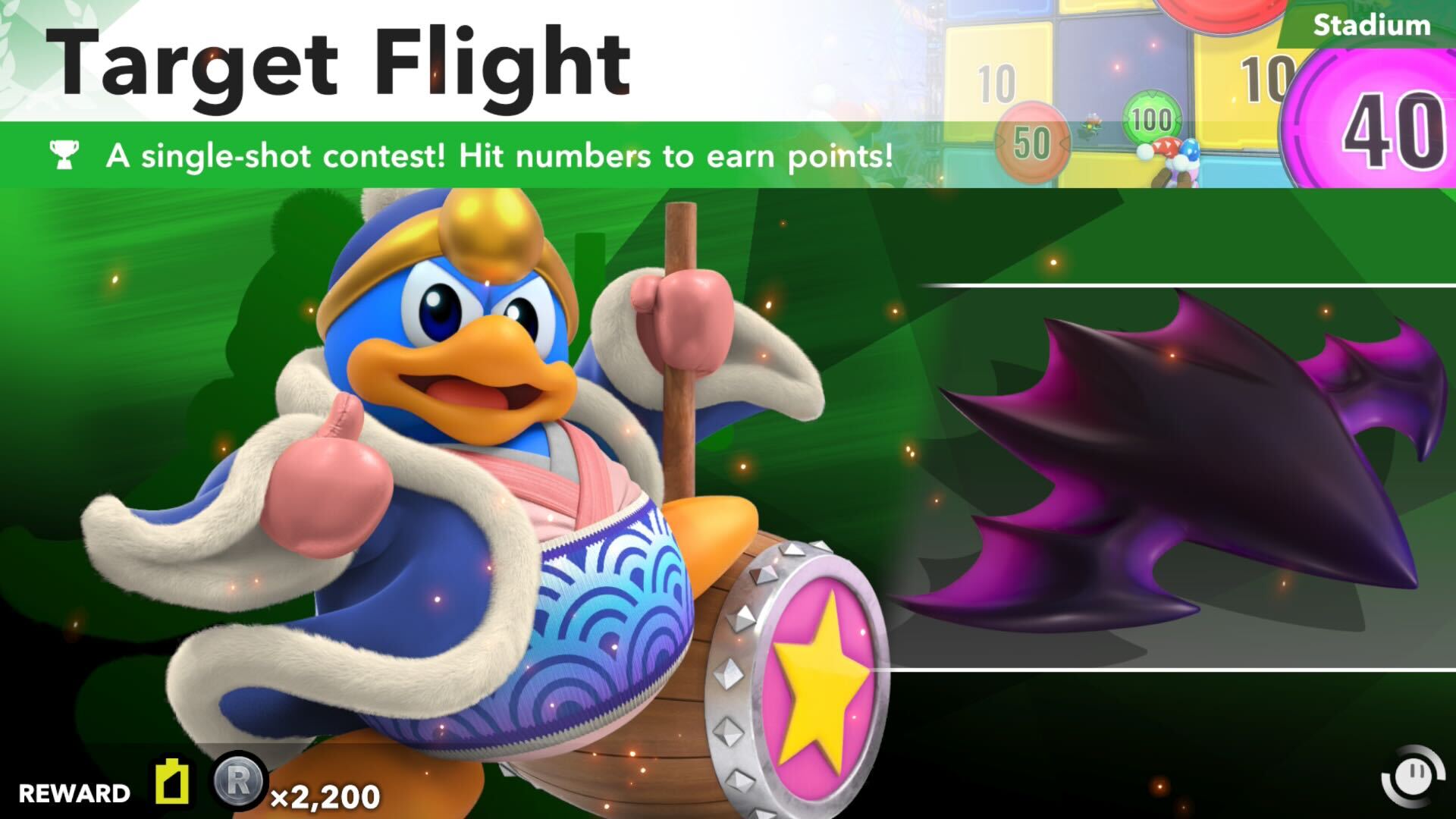
Road Trip, on the other hand, is much more enjoyable, and by far my favourite part of the Kirby Air Riders experience. This is a fully-fledged single-player story mode, and it’s got some neat tricks up its sleeves. It has you progressing through 10 areas, each of which has a series of choices between different challenges, along with boss fights, shops, and more.
Your ultimate goal is to unlock vehicles, slowly get stronger by way of upgrades and those new vehicles, and make it to the end. Each challenge is similar to one of the challenges in City Trial, and you’ll get to pick from three multiple times in each area. Each challenge has a different upgrade associated with it – like top speed, HP, acceleration, and gliding – so you have to balance your upgrades, often taking on tasks you aren’t necessarily the best at so you have a nice, well-rounded skill set. It’s all interspersed with a fascinating, often dark story, with beautifully animated cutscenes and a storytelling that punches well above its weight for what is ostensibly a silly little kart racer.
What makes Road Trip so enticing is that the areas you visit throughout each trip are not necessarily set in stone. At certain points throughout your journey, you’ll make a choice between three different helpers – or sometimes no helper at all – and when you reach the end of an area, that helper will let you progress in their own specific way. This means that you could end up in a high-tech, electrical area, or an underwater cave system, or even a rainbow area in the clouds, depending on which helper you choose.
This makes Road Trip almost infinitely replayable, and while it’s not quite a roguelike – you can retry any failed challenge an endless amount of times, and even rewind to pick a different challenge – it does scratch a lot of the same itches that something like Dead Cells does for me. The branching paths make Road Trip more exciting each time you go through it, as you try to take different paths and see how the game plays out differently, and there are mechanisms in the game that make prior runs through Road Trip influence your future runs.

It’s by far the most focused, concise, and collected game mode in Air Riders, and I can absolutely see myself getting 100% completion in Road Trip. Where the rest of Air Riders feels like a loose collection of stuff to do, Road Trip pulls it all together into one coherent experience — though it’s a shame that it’s single-player only, I imagine you could do some interesting stuff with it by interweaving some online connectivity.
No matter which game mode you choose to play, you’ll spend a lot of time unlocking new items. There’s a challenge board for each game mode, each of which has dozens of challenges and unlocks, and when you complete a challenge you’re rewarded with a sticker for your license, a new vehicle, a playable character, new patterns and colours for your vehicle, and more. It’s a great system that makes you feel like you’re always making some kind of progress and unlocking more toys to play with, though it can be overwhelming staring at an empty board and knowing you have so much more to do to unlock everything.
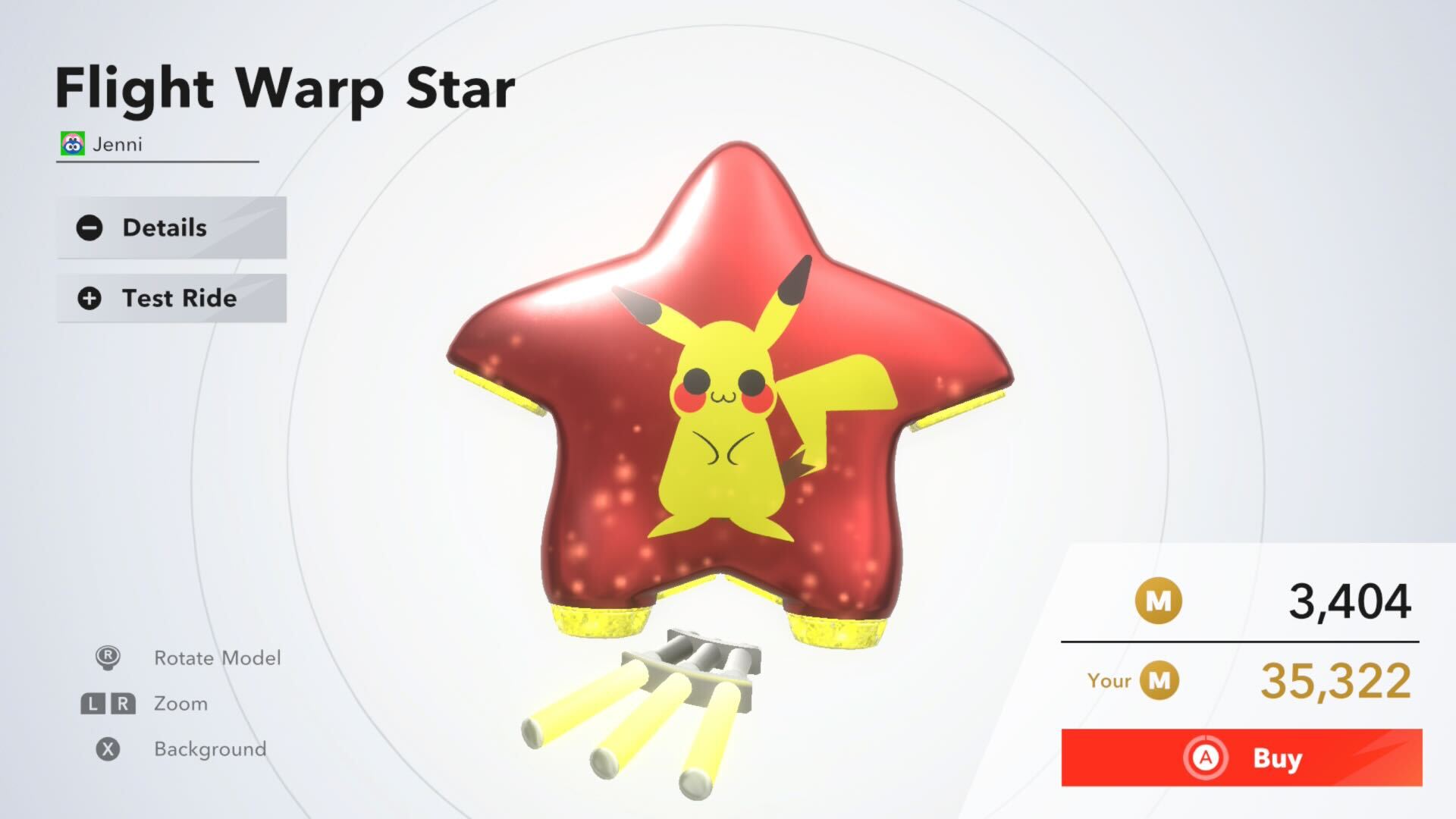
Many of those unlocks are used for vehicle customisation, which is an absolutely fascinating addition to Air Riders. There are extensive customisation options, from colours, materials, patterns, and shapes to stickers, decals, accessories, and effects. There has to be millions of variations, if not an effectively infinite amount, and the customisation screen is far more detailed than it has any right to be.
Once you’ve customised your vehicle, you can ride on it yourself, or you can list it on the marketplace for other players online to buy. Each vehicle starts at a set price, but then as more people buy your design, the market surges upwards, increasing the price of your hot commodity. You get a bunch of coins if your design is well-liked and purchased by many, which you can then pump back into the market. It’s really quite incredible to have Forza Horizon-style customisation and marketplaces like this, and even now, pre-launch, there are dozens of amazing designs on the marketplace. There’s no doubt that the marketplace will soon be filled with genitalia, but that’s the price you pay for extensive customisation like this.
Kirby Air Riders is a fascinating game that walks the line between being a chaotic, unfocused mess and one of the most enjoyable party games and single-player campaigns on the Switch 2. For better and for worse, it’s a true successor to the GameCube’s Air Ride, taking everything people loved – and hated – about that game and ramping it all up to 11.
Rating: 4/5

Comments