

By the time we got to interview Axel Torvenius, creative director on Indiana Jones and the Great Circle from MachineGames, there were quite a few interviews out there and they stole all the best questions. So in addition to finding out more about the Switch 2 version of the game, we went a little off-piste and got into the weeds on game collecting and what it’s like to do press for a game for years after you finish.
Indiana Jones and the Great Circle is out now, check out our Switch 2 review of the game as well as our bargain guide.
Vooks: Everyone loves the Indiana Jones films, but there’s also been a long history of Indiana Jones games. The game starts off with the flashback from the movies, but is there anything from the past games that you learned or maybe included in the game as well?
Axel: It’s an interesting question. I think to some extent the short answer is no, but that’s not entirely true. Because when we’ve been developing the game throughout the entire production cycle, we’ve been trying to digest and look at as much Indiana Jones content as we possibly could. That of course includes the old games, and also storyboard books, fan fiction, comics, everything. So even the old games are part of the great ether of Indiana Jones influence, products that we have looked at. But we haven’t specifically looked at any of the previous games and said, “oh, exactly what they did there, that’s a good thing, we should do that.” But as part of the great reference, so to speak, it’s obviously part of that, but not in any more specific way.
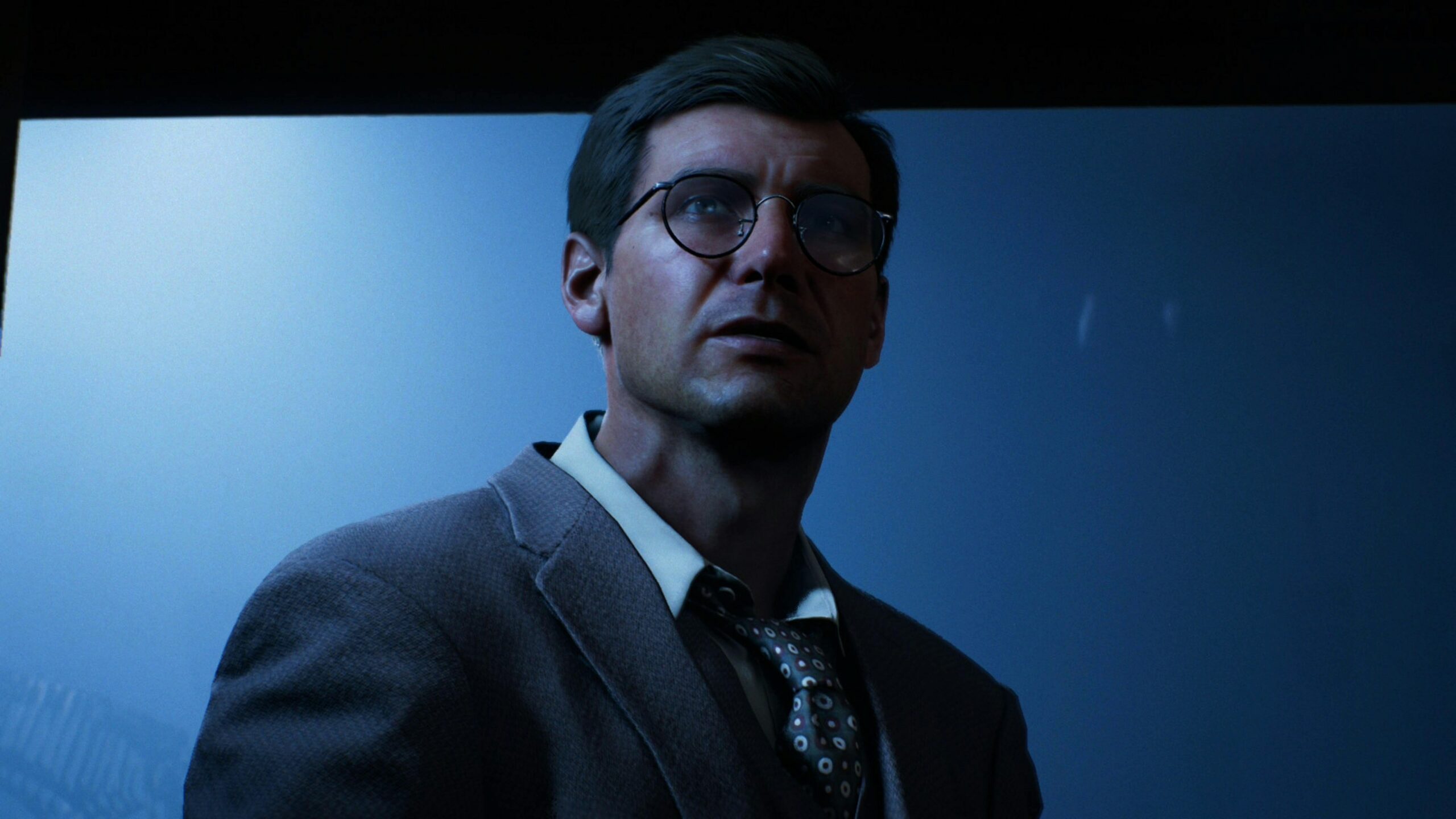
Vooks: So the game features Harrison Ford’s likeness, but Troy Baker’s voice and performance, which is wonderful. Was there ever a concern that you wouldn’t be able to get Harrison Ford’s likeness? And if you hadn’t, would that have influenced the voice performance as well?
Axel: Yeah, that was one of the biggest concerns and challenges that we had. Maybe not so much of a concern, and more focus on the challenge part of it. Because when you are deep diving into that, you get very focused, and then you have an end goal, which we knew from the very get-go: we want the game to feel and look like you are actually playing a young Harrison Ford. So we need the voice to be right, we want the likeness to be there, the type of performance and gestures that he’s doing. And when we started to lock into that, you kind of forget all the fears and the worries, and you just try to solve the problem. But it was not easy. It took quite a while before we could see that the in-game representation actually did look and feel and sound like a young Harrison Ford, aka Indiana Jones. So it was by far the biggest challenge.
Vooks: You play the game from a first person perspective. Was that choice based on whether or not you’d get that likeness?
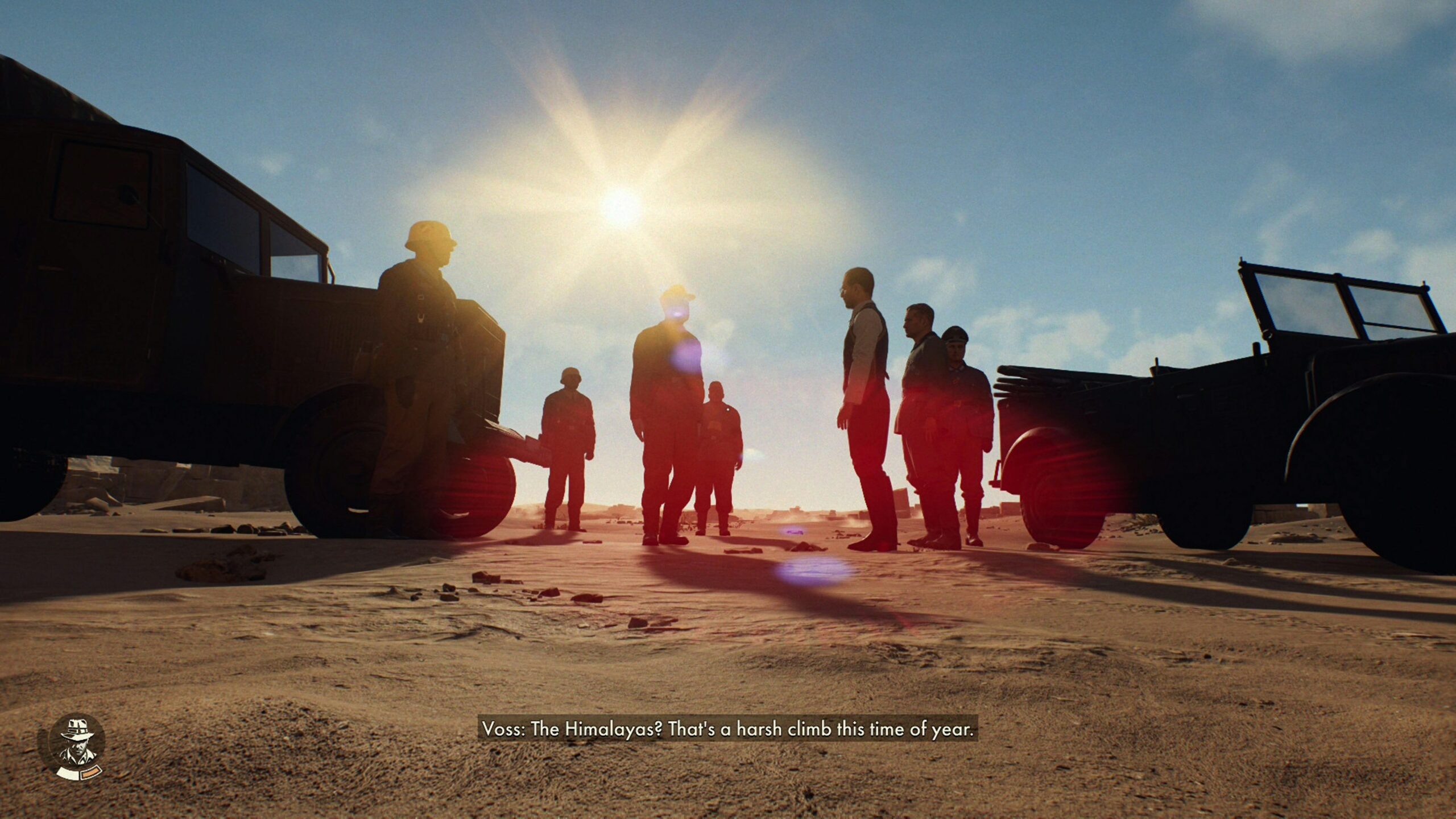
Axel: No, no, it was a choice that was completely separate from having the likeness nailed down or not, because from the beginning we were already planning out the insane amount of cinematics and cutscenes. And they are all in third person. I think we have around three hours and 45 minutes or so in terms of cutscenes and cinematics, and all of them of course need to be in high fidelity, seeing the facial features of Indiana Jones. So that was a decision completely separate from that challenge. We also pretty early on knew that we wanted to do the game in first person, for numerous reasons. Some people have been asking me, “oh yeah, because you’ve always done first person games, so you’re lazy, right?” No, it was not due to that reason. I think if, when we started doing the analysis of the type of game that we wanted to do, we had said this needs to be in third person because that’s the only way the game would benefit the most, then we would have solved that and made it into third person. We do have a lot of third person in there, because as I guess you’ve seen, in all the traversals and a lot of the platforming we cut out to the third person camera and then back into first person. But being in first person just allows the player to be fully immersed and also get very up close to the action and up close to all the inspections that we’re doing.
Vooks: So the Switch 2 is still pretty new, and you guys would have been working on it when it was still behind the curtain. Did Nintendo approach you to do a port, or did you approach them, or how does that work?
Axel: When the opportunity arose and we were made aware that there’s an opportunity to get the game onto Switch 2, we were really thrilled. At MachineGames, as game devs, we want the game to be as accessible as possible. We want to be on as many platforms as we can, because we poured a lot of passion and love into the project, and we enjoy when people can enjoy it. So when the opportunity arose and we saw that there’s a chance to get it onto Switch 2, we gladly jumped on it. And we’ve done the majority of the heavy lifting internally with the engineering team, making sure that porting the game to Switch 2 holds up in terms of quality and foremost content, I would say.
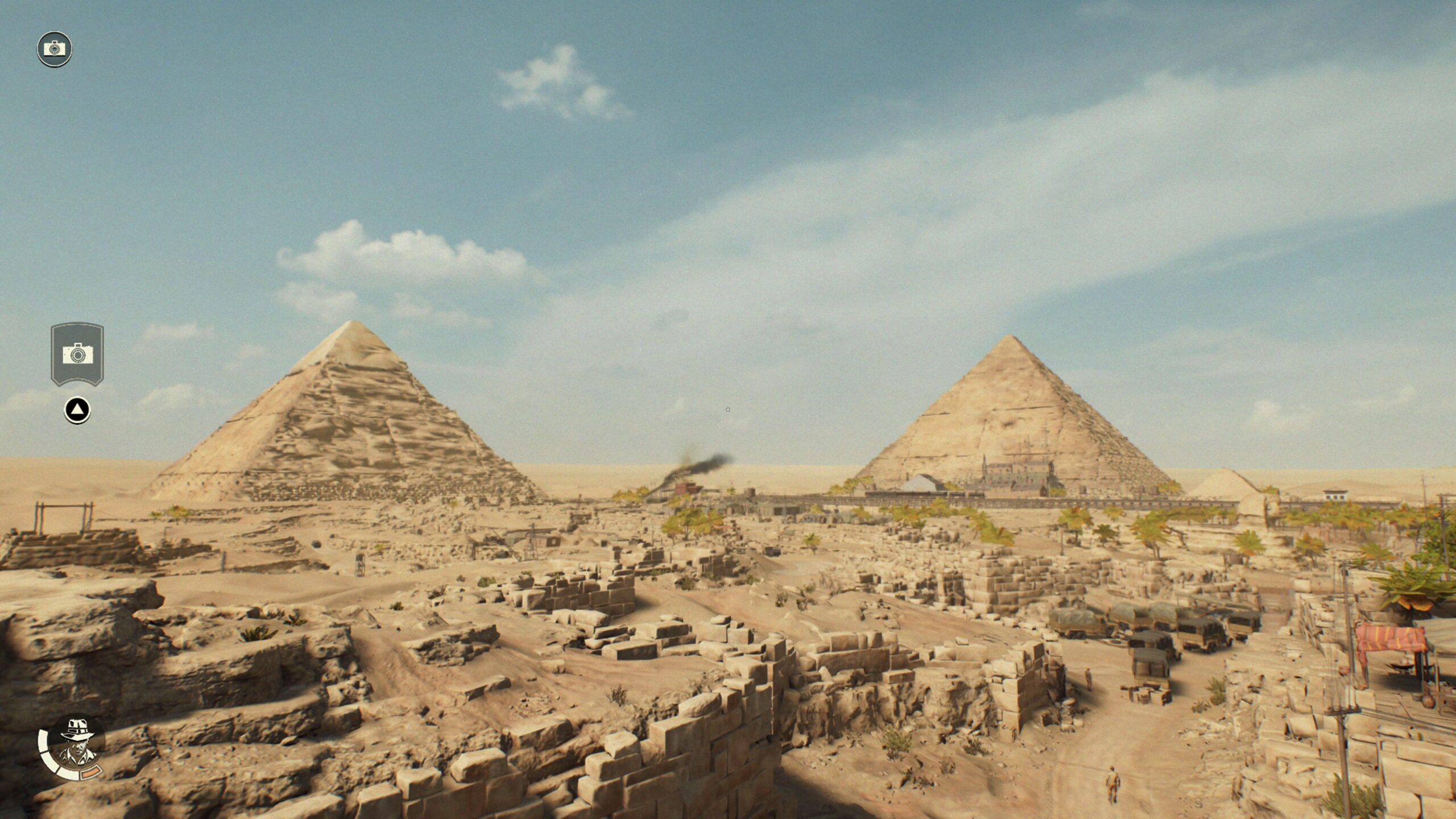
Vooks: Yeah, I’ve been playing it and I’m just amazed how good it looks for such a small console. That was leading into my next question. The Switch 2 obviously isn’t as powerful as a PC or a PlayStation 5. Do systems like the Steam Deck and the Series S mean that there’s a new reality where games need to be more scalable? Not just running on the best and biggest all the time, because it seems very comparable to what’s out there.
Axel: Yeah, there are all different platforms, and with that comes very different hardware. It comes with different sets of challenges. There can be different capabilities in the CPU and the GPU, all of these things that impact how and what you need to optimise on the dev side of things. One thing that we did for the Switch 2 was we locked the frames per second to 30 to ensure that it would run stable and smooth, and the player experience would still be smooth compared to 60 frames per second on the other platforms.
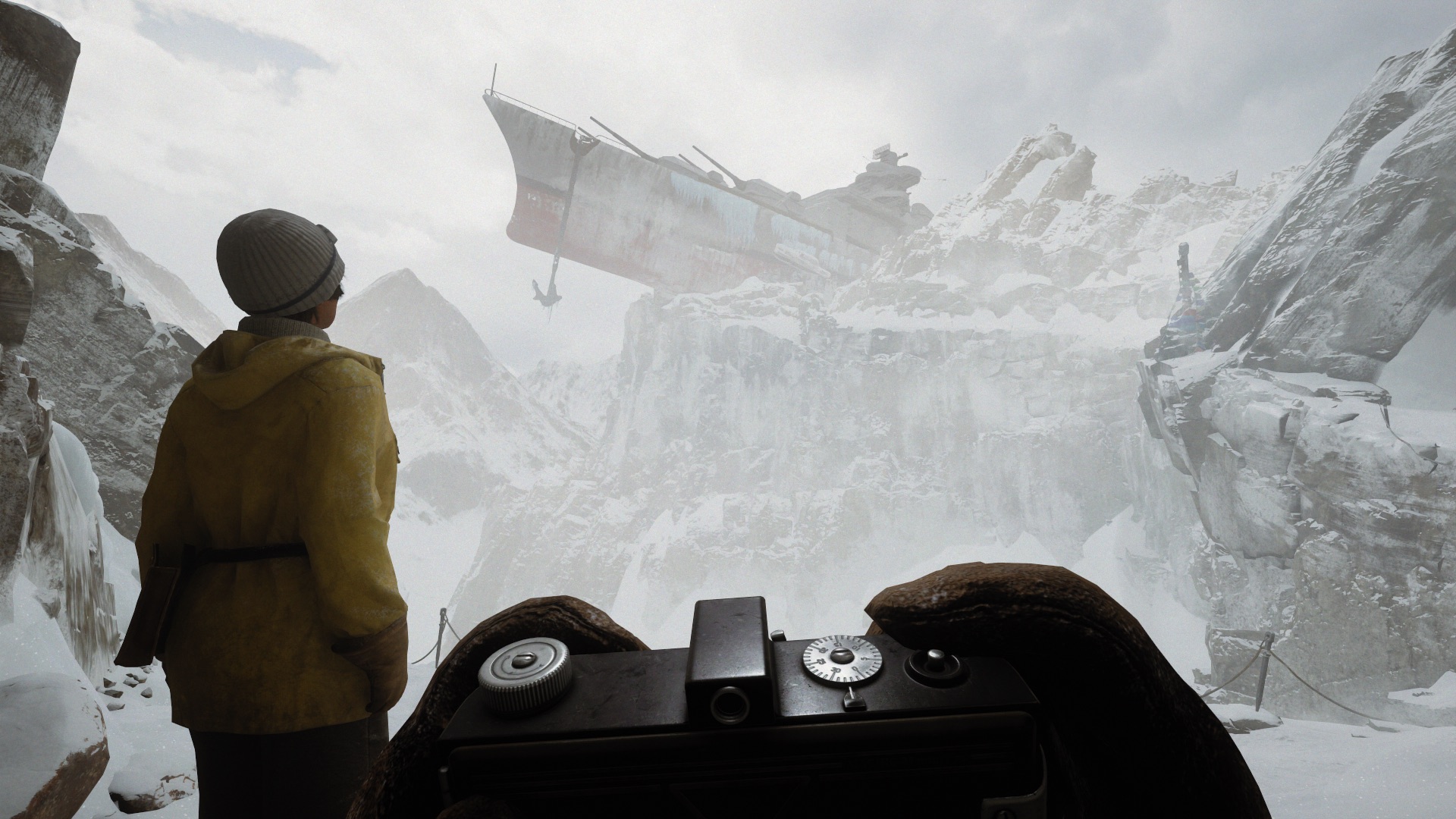
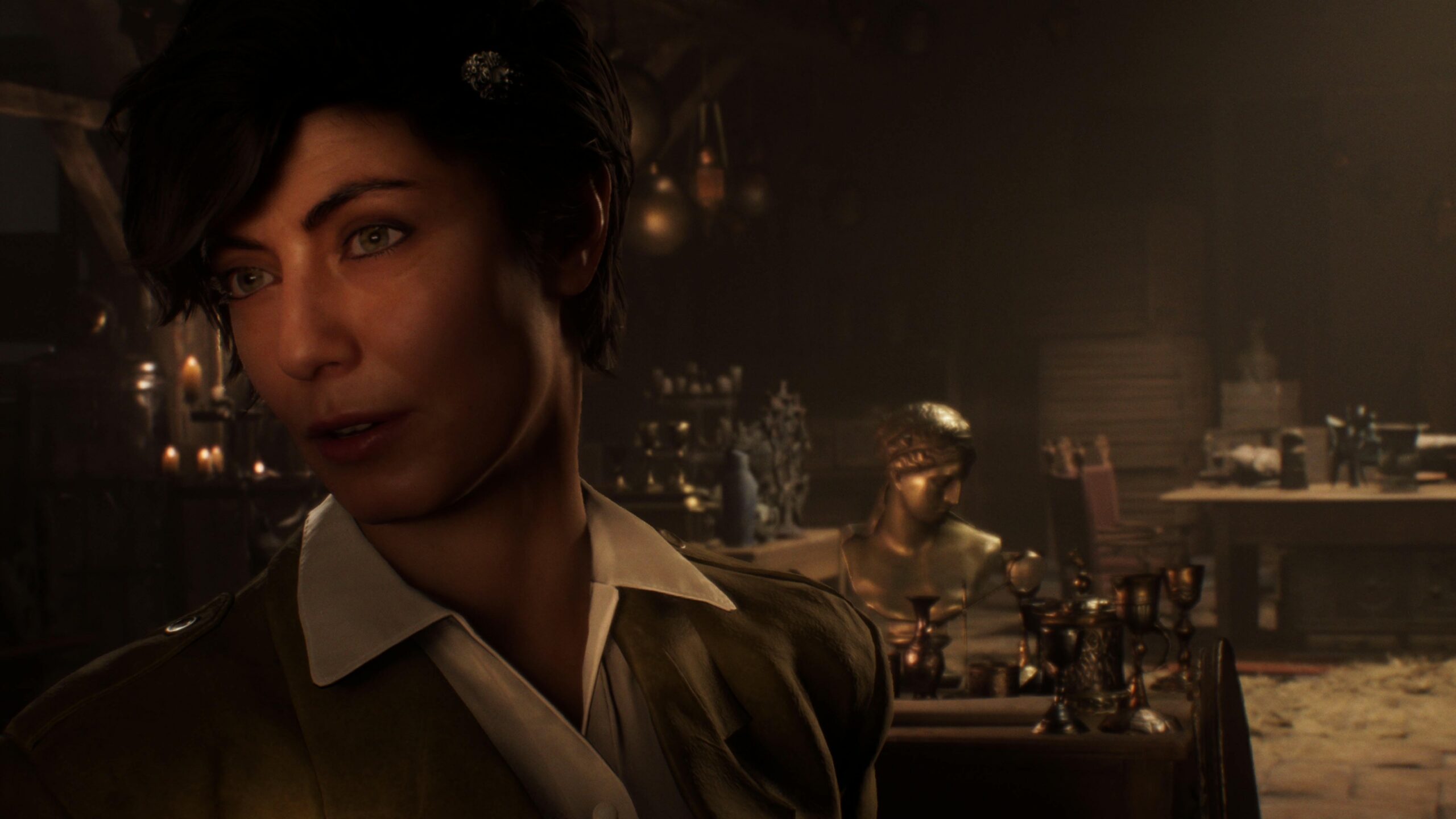
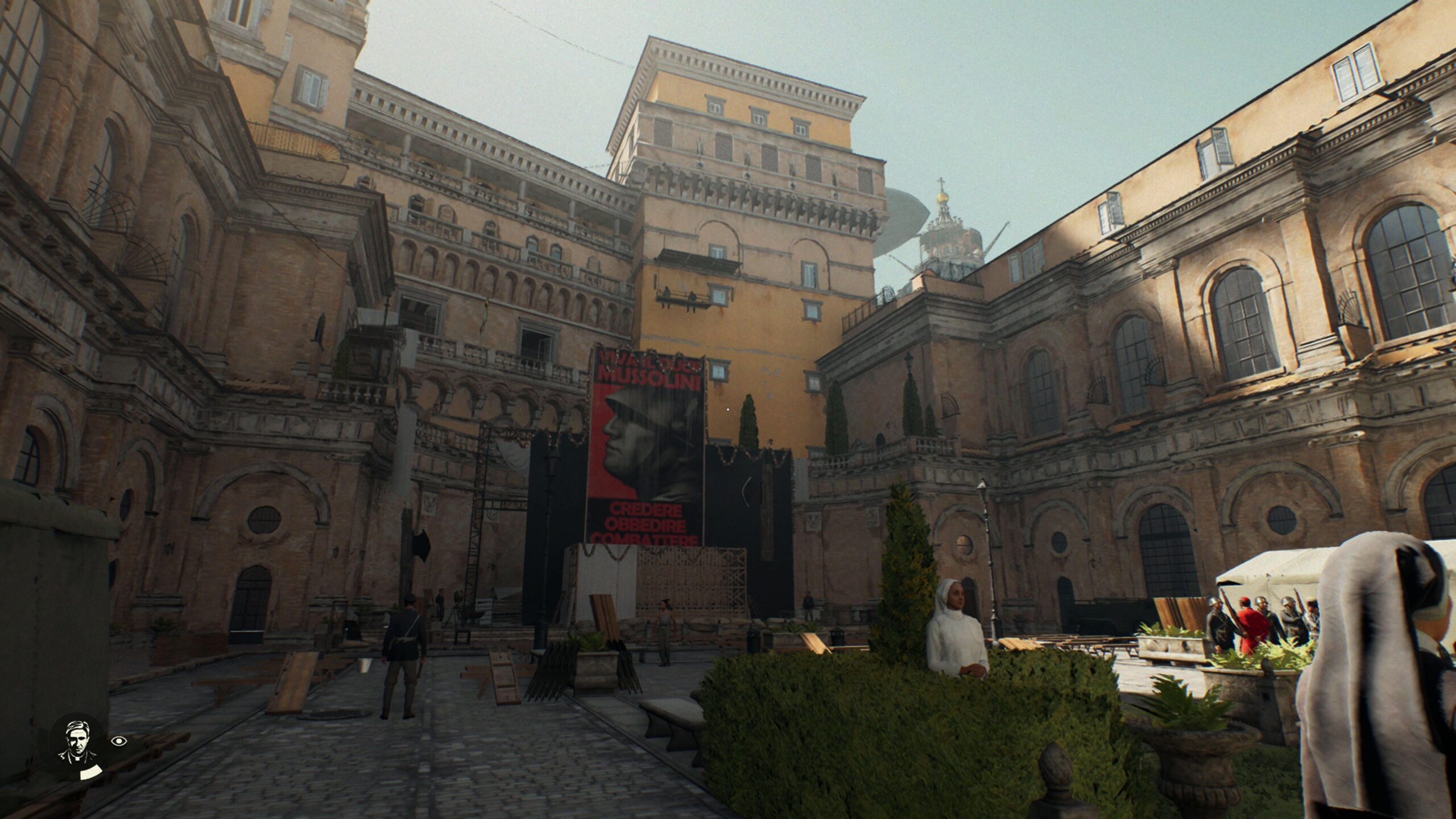
But when it comes to the fidelity and the quality of everything, it is one-to-one with the previous release that we did for the other platforms. And that was something we were very keen to make sure we honoured, that Switch 2 players wouldn’t feel robbed on any content. We haven’t cut out any content. We haven’t changed any gameplay systems or hint systems or anything. There’s one location in the game where we scaled down on the amount of roaming NPCs in a very open environment, but that’s only one location.
When it comes to thinking about the different platforms, I absolutely do think that as a game developer you need to start thinking about the broad spectrum of different platforms, the opportunities but also the challenges, already when you are in the early phase of production. If we know that whatever game we would be making next might come to another platform down the line, then you need to have that at the back of your head when you start planning out certain features. So I do think that it changes the landscape a bit for how game developers develop games. But at the same time, this has been around for quite some time in terms of porting different projects to different platforms. And there’s always differences in how the data is treated and how the rendering is set up and all these things.

Vooks: Yeah, so some of the more advanced features on Switch 2, you’re using DLSS, I’ve read, and it also looks like it’s using ray tracing at some points, either way the reflections are really good otherwise.
Axel: Yeah, absolutely. DLSS 2. And then some of the specific features that we embraced and really thought were interesting with the Switch 2 were the gyro controller and the mouse support. We looked at the Switch 2 in terms of what are the unique features that are really cool and something that you can really utilise, and we focused in on the gyro controller support and the mouse support. I think specifically the gyro is really interesting, because it allows the player to experience the game in a slightly different way. It adds another layer of immersion, I would say. So I’m really hoping that people will enjoy that. We have it in a staggered way where you can have it turned on when you’re aiming in aim mode, and then you can fine-tune your aim, or you can have it in a more broad sense, just moving around and trying to pick up objects.
Note: Bethesda and MachineGames let us know later that Indiana Jones and the Great Circle does also support Ray Traced Global Illumination.
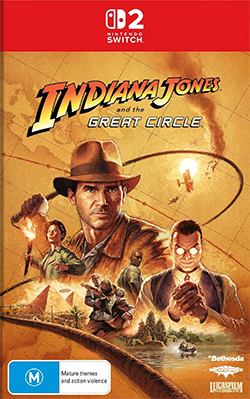
Vooks: So Indiana Jones is one of the rare third-party games to be fully on the game card. Compared to the other consoles, it’s actually got more of the game on it than any other system, because all the others require a download. Was that a choice you guys wanted to make?
Axel: Yeah, absolutely. For us, it was something we pushed for internally from the MachineGames point of view. I mean, just by looking at what your room looks like back there, Daniel, it looks like you like to collect stuff as well. And I think we are a lot of those people here at MachineGames too. We enjoy having a library of cassettes and cartridges and physical copies of games or collector editions. I collect toys and whatnot. So I think we at MachineGames recognise that people think this is a good feature. And the response that we’ve seen so far from the community, everyone seems to be very positive that there is an option to have it on cartridge. So yeah, we are 100% honouring the collector aspect of it. And then of course the fact that you can just have it on a cartridge and slot it in.
Vooks: Yeah, awesome. So this game originally came out in 2024 on Xbox, and you’re here now in 2026 still talking about it. Normally when a game launches, you do a bit of press and that’s it, you move on to the next thing. And you did the PlayStation version in between as well. Has the extended time with the game made you reflect differently on it compared to other projects that you’ve maybe moved on from more quickly?
Axel: It’s a very interesting question. I think I could talk about this for quite some time. Because I do absolutely think that it changes our perspectives from the dev point of view to some extent. Typically we’ve done games, maybe a few DLCs or something, but the post-life of the games is most of the time, as you say, not that long. There’s a honeymoon around release, and then there’s post-launch content and activations, all of these things. But the experience we’ve seen with Indiana Jones and the Great Circle has proven that it’s not only about making a good game and then releasing it, and then it’s like, “whew, we’re done, on to the next.”

There is, or could be, a period of afterlife that really calls for attention. And depending on what you’ve done with the product up until launch, depending on how you set yourself up for that post-life, is night and day in terms of importance. So if you’ve done the work correctly, and if you’ve been thinking about what you will do with the game after release, it absolutely impacts the full development, it impacts how we think and the philosophies in terms of what the game is and what it could be and what it could become, and what type of future it has.
So I do think it has absolutely been, not a wake-up call, because we’ve always done post-launch content, but not to this extent in terms of one year, one and a half years after, we’re still talking about it. We went to the BAFTAs a couple of weeks back. That, as a game developer, is humbling and also eye-opening to some extent.
Vooks: Yeah, I’m a web developer, and usually when you finish something that’s it, it’s published and you’re fixing bugs, but you don’t get a chance to look at it for so long afterwards because you’re on to the next thing.
Axel: And it depends so much. Certain studios and other types of games that are live-service, they live with that type of ongoing maintenance in terms of game development and game design constantly. But typically what we’ve been doing at MachineGames is we make one big chunk of a game that has a strong story, a lot of action and whatnot, and then it’s out and that’s a solid product. But I think the afterlife that we’ve seen with Indiana Jones is both exciting, and it also opens the eyes a little bit more in terms of how we’re looking at our own production.
This interview has been edited for clarity and readability. Thanks to Axel for his time!

Comments