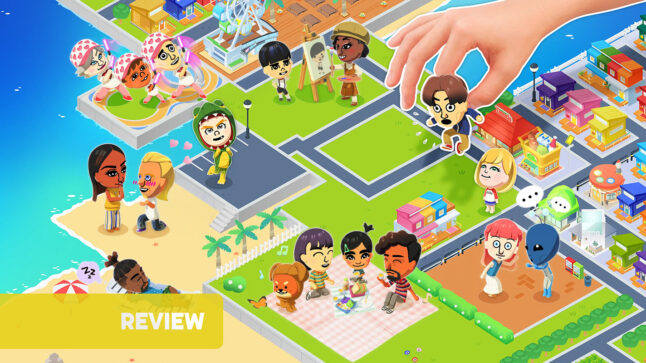

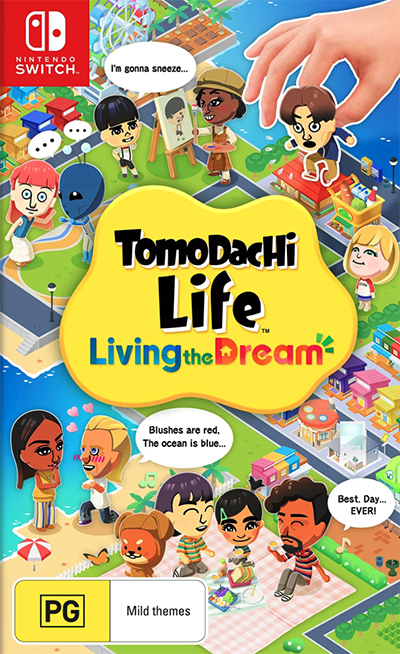
You no longer have to dream about a new Tomodachi Life game; you can finally live it! Tomodachi Life: Living the Dream is the latest take on Nintendo’s social simulator. I previously wrote a bunch of words on it in the preview, which gives a more basic overview of the game. Now it’s time to get down to the nitty-gritty and see if Tomodachi still has life, or if it’s a bit naff.
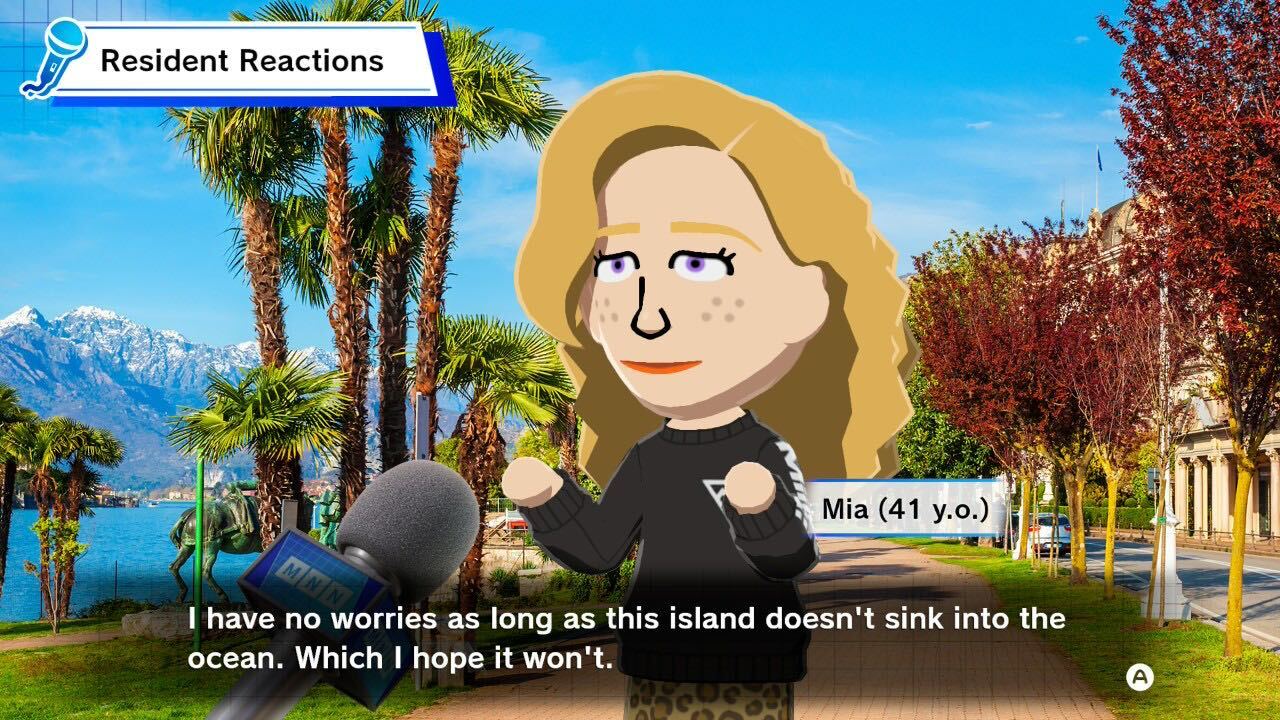
To live your Tomodachi dream, you get to be the boss of your own island. Design it as you wish, fill it with Mii’s and let them run loose. Your Mii’s are no longer confined to living in one giant apartment complex, but get their own little houses to call their own. There is no explicit goal in Tomodachi Life other than to help your Mii’s live their lives. Feed them, clothe them, help them with their big decisions, or even just play a game with them. As you make your Mii’s happy, they’ll gain their own experience/happiness levels and give you Warm Fuzzies to help rank up the island.
Over time, Mii’s will want to move in together, adding their rooms to create a shared housing, with communal living and dining areas. They’ll hold meetings to determine who’s the best at something, or just to give a member of the household some praise. When Mii’s become partners and get married, they may even ask if they should have a baby. It’s a roller coaster of emotions, drama, and some very silly situations.
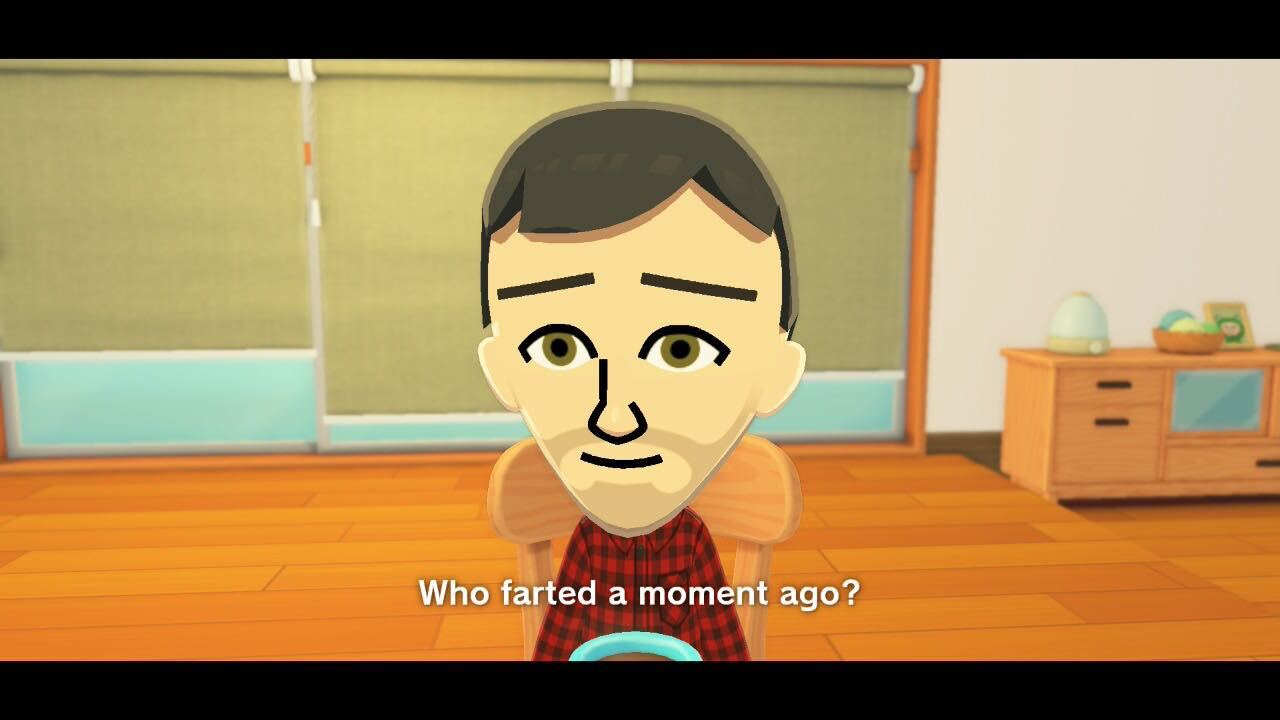
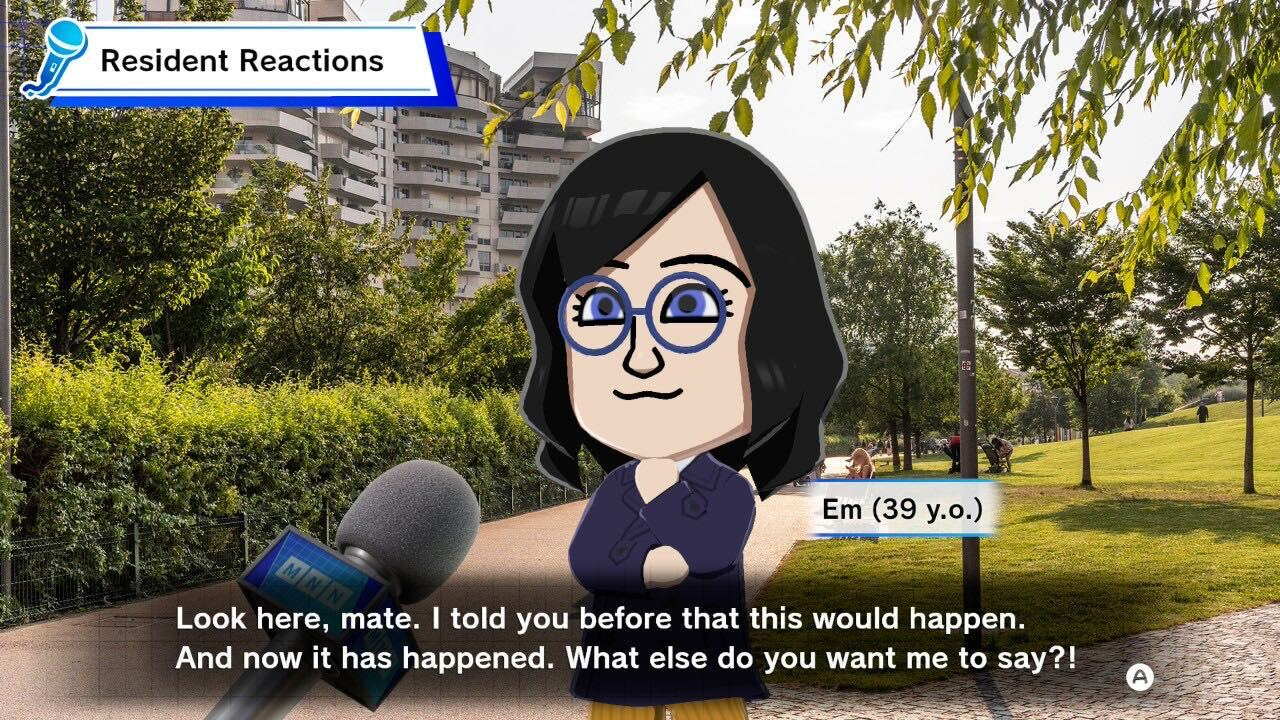
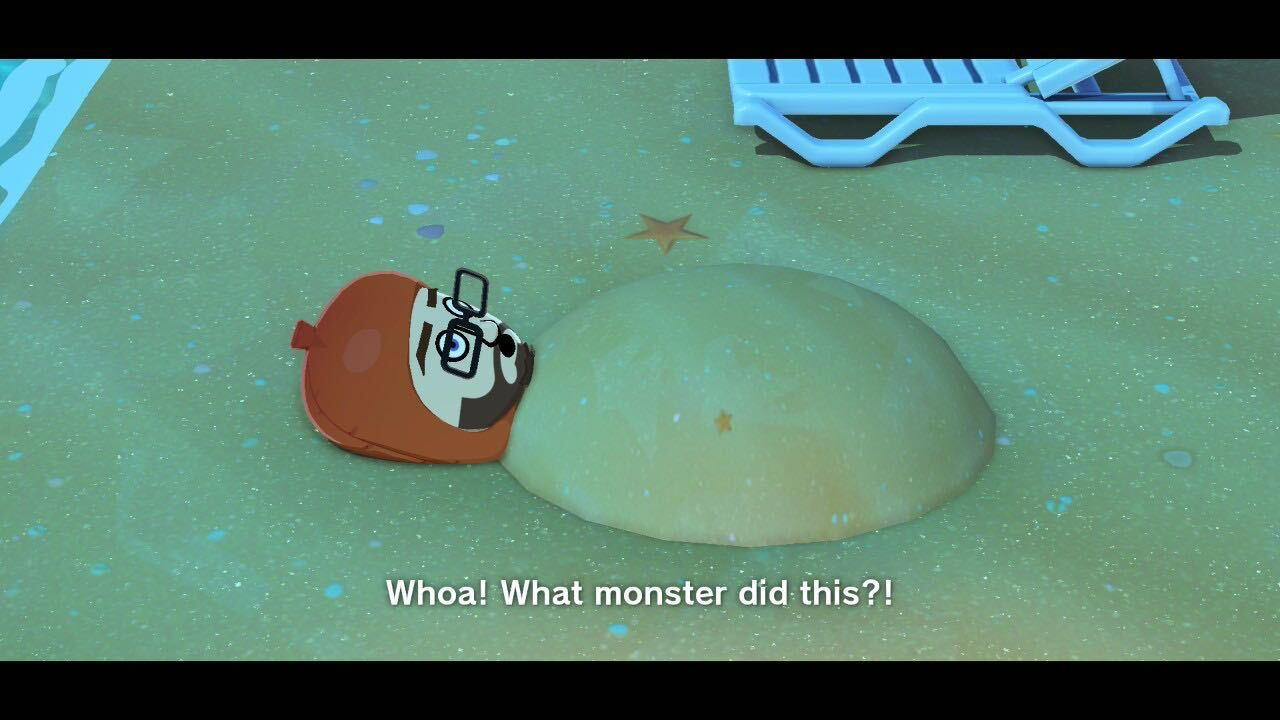
Tomodachi Life: Living the Dream remains deeply unserious in the best way. Whether it’s the things the Mii’s do in each other’s company, skits they perform, or even when they’re just wandering around the island flicking a torch on and off in the darkness. It’s hard to describe just how silly the game can be without spoiling any number of events, dreams, or news stories. This sense of humour really carries the game and helps to encourage players to engage with the Mii’s. Even just taking your time and watching people/Mii watch the Mii’s live their lives.
It’s not long before you expand past six Mii’s. At this point, you unlock a much larger citizen limit. To accommodate this, the size of the island can be expanded too, with a lot of freedom to design. The previous game did have a higher Mii limit, but then it didn’t have all your Mii’s roaming around, interacting with each other and the island on the scale of Living the Dream. Personally, I didn’t come close to filling Big Cheese Island with 70 Mii’s. Even 20 felt like enough, giving each Mii the opportunity to become someone memorable on the island and known to one another. It’s not a negative on the game, but it is something that people might want to know if you’re coming in with some grand designs.
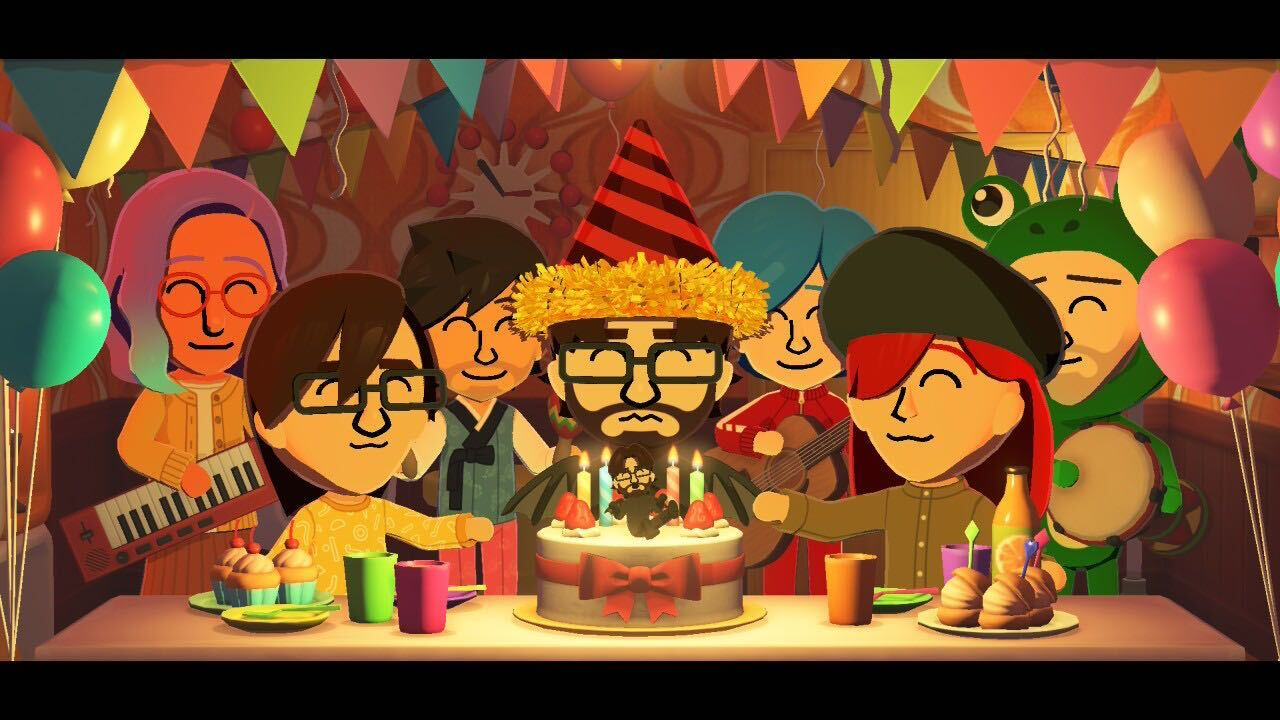
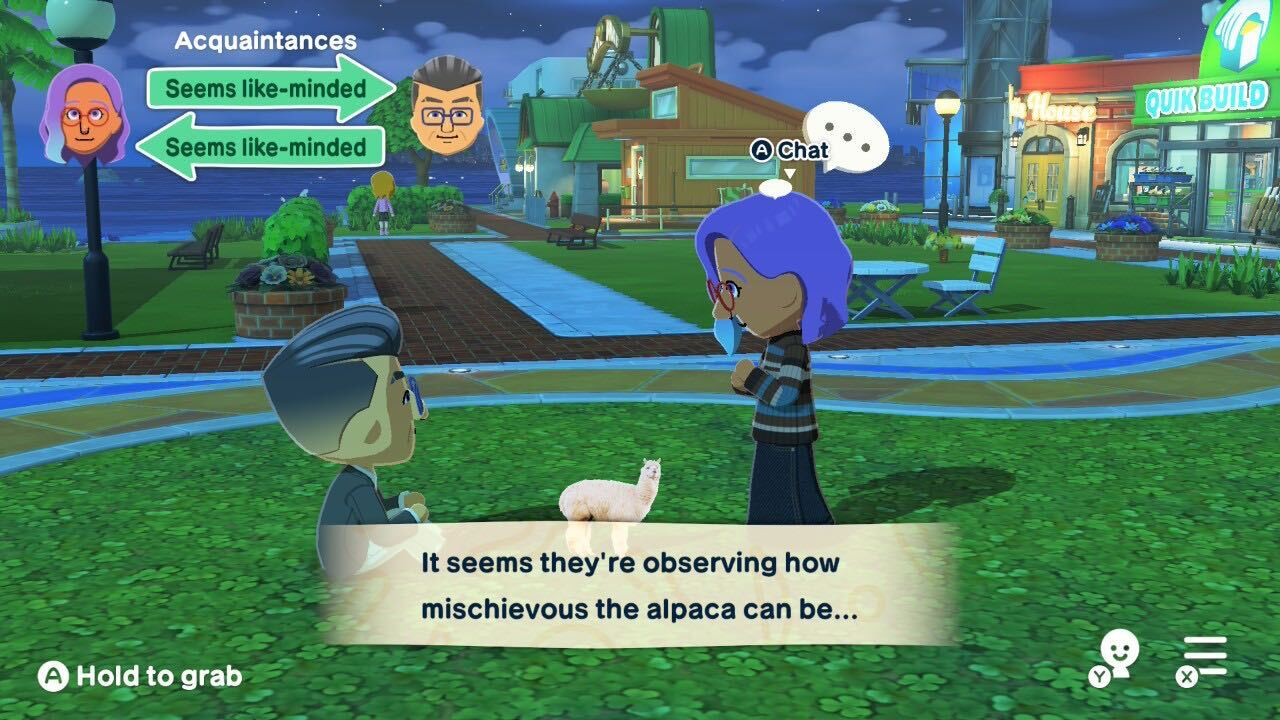
Instead of more direct involvement à la The Sims, Tomodachi Life is more about watching the world around you – people/Mii watching. This is where the game really gets its chance to grow over time. The more Mii’s, the more variety there is across the island. The more the Mii’s level up, the more individualised they can become too. It’s a joy to see the Mii’s grow past your regular nudging and form their own connections. As you give your Mii’s more quirks through levelling up, you can further individualise each Mii, whether it’s how they walk, eat, stand, or the phrases they use. As you add more items to the island and supply your Mii’s with more prezzies, the more they have to do as they go about their business. It was funny seeing that a group of Mii’s had formed a club around one of the prezzies, all participating as a group.
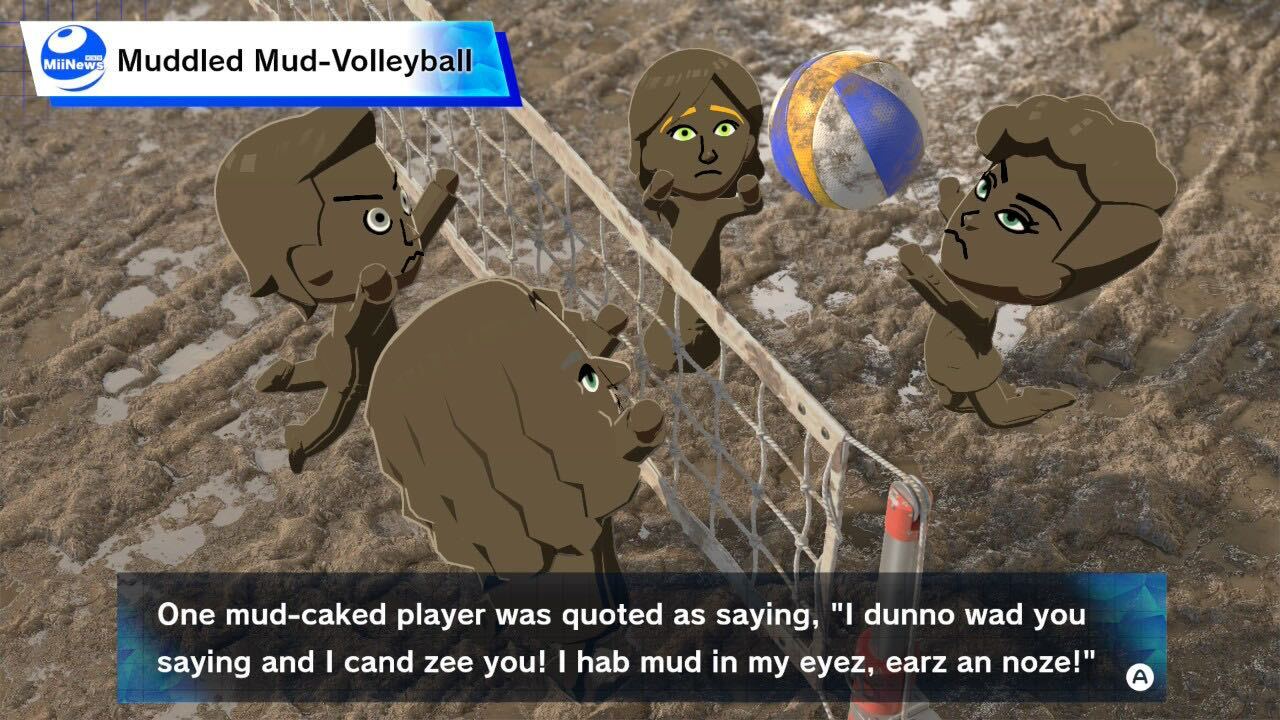
There is the potential for getting a good long while out of Living the Dream, but it’s really what you make of it. While you can help Mii’s make decisions, help influence their crushes, or if they move in with someone, the outcomes are still largely out of your control. Your Island can be a runaway soap opera, and you’re just helping to keep it running. With this, the pace has the potential to be off-putting. If you’re wanting long gaming sessions on your island, then it can lead to some drawn-out Mii watching and waiting for things to happen. Not that it’s ever very long until your growing community will pop up with quick requests or want to play a minigame with you. As you add more Mii’s, there is more to keep you busy, as you help to get everyone acquainted, fed, and tended to.
While your Mii’s tend to be their own independent selves when it comes to interacting with one another, they can also be needy as hell. There’s the understandable desire for a certain kind of food, or a change in clothes or room design. Then there’s the Mii’s desire to ask you to stump up the cash for new things, to place outdoor furniture or other objects around the island. At first, I thought “why not”, but the Mii’s just won’t stop! The positive is that you can tell them “no” when you don’t need another bench or picnic set up. Otherwise, it can be refreshing to see what your Mii’s get up to when they ask if they should change their hair (temporarily) or get the opportunity to teach the community another personalised word or phrase to throw into their vocabularies.
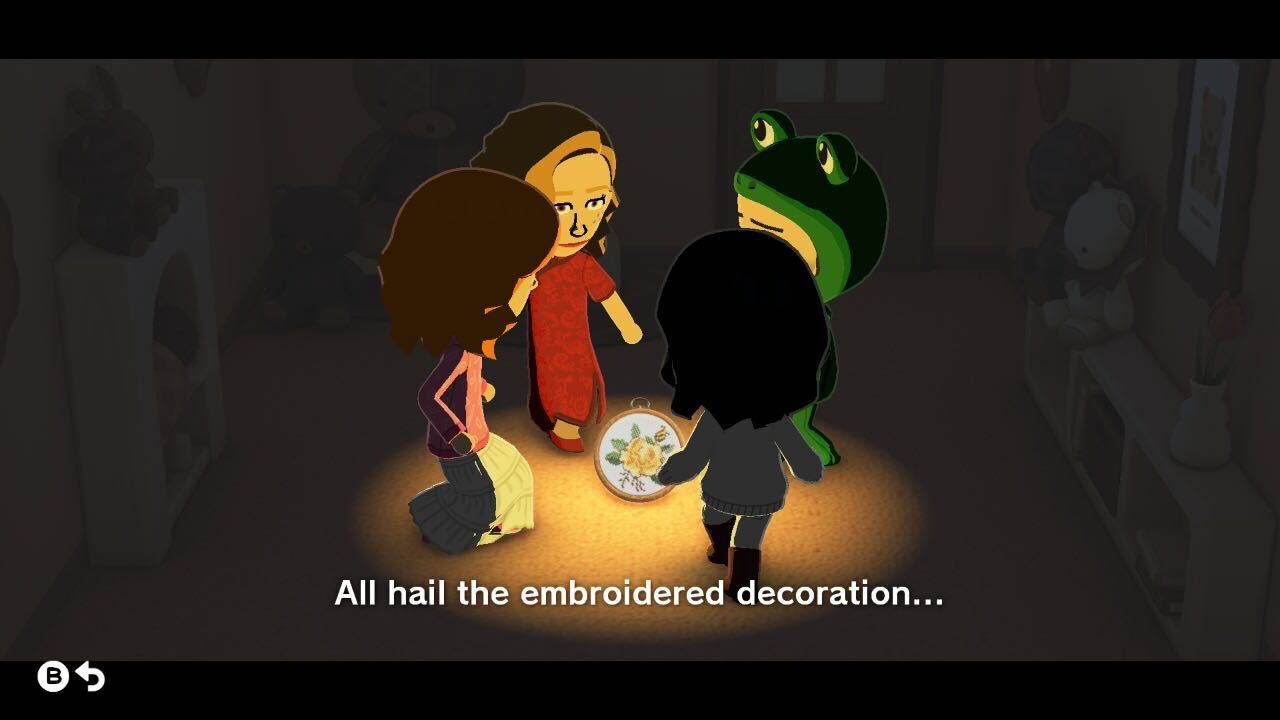
The development team at Nintendo has done a great job at ensuring so much of your Tomodachi Life is customisable. And true to their word from over 10 years ago, the game is more inclusive regarding genders and same-sex relationships. When creating a character or at any time throughout the game, you can select a Mii’s gender, whether it is male, female, or non-binary. You can select pronouns, you can choose which gender your Mii can be romantically interested in, and even what style of clothing the Mii will wear for celebratory events. Being mindful that people may be making Mii’s based on the people in their life, you can also indicate if a Mii is related to any other Mii’s on the island to keep from any awkward romances. In the spirit of customisation, these are options for you to decide. If it’s a part of the game you don’t wish to engage with, you get to select the options and leave it.
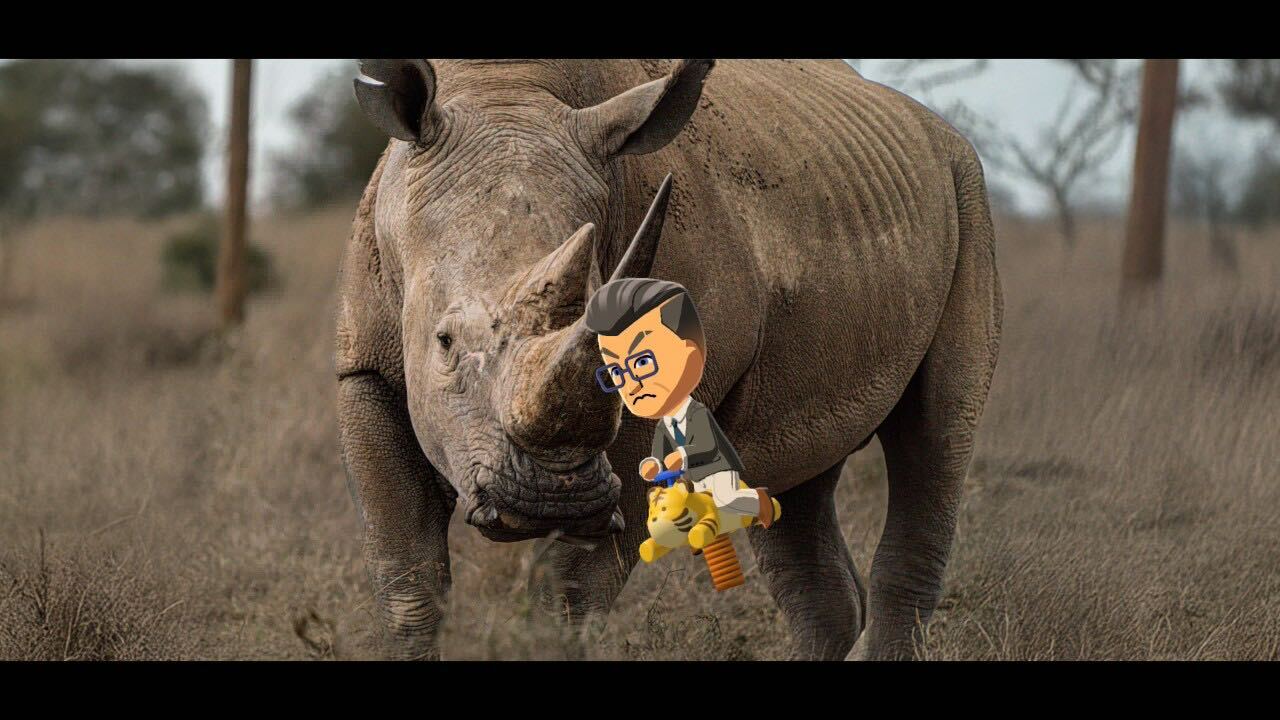
It wouldn’t be a surprise that the random events that happen on the island become less fresh as time goes on. However, it never makes them less endearing or goofy, especially as the little variables change. Even so, after well over 30 hours overseeing Big Cheese Island, there are scenes I know I haven’t seen yet, while I’ve seen a few many times. I still haven’t seen more than two of the “All-time Favourite” or “Absolutely Hates” food reactions. It’s honestly hard to know how much is tucked away in this game; the interactions continue to surprise and entertain this many hours in.
One thing that is missing from the previous game that stands out is the Concert Hall. Previously, you could have your Mii’s rocking out and singing songs; like many parts of the game, it was silly and fun to share with others. I am hopeful that it might still make an appearance as an update, but it’s a shame that it didn’t make the cut at launch. The Concert Hall isn’t the only activity or mini-game missing, although it doesn’t mean there’s not plenty to do without them. It’s hard to be disappointed; the last game was over a decade ago, and demanding that the next game just does all the same things isn’t reasonable. Although I definitely won’t be complaining if Nintendo provides some updates after launch that add some more variety.
The way to approach Living the Dream is ultimately up to you. You can enjoy it as a people-watching laid-back caretaker, or you can be a busy, micromanaging God. Unlike Animal Crossing, there isn’t the pressure to check in on everyone lest they look to bail on your island community. Your island doesn’t go to crap if you’re not tending to the weeds, and you’re not on the hook to try and keep up with events. It’s actually a relief that this is the case; Living the Dream is about giving you the tools to create a paradise of your making, whilst not turning it into a chore.
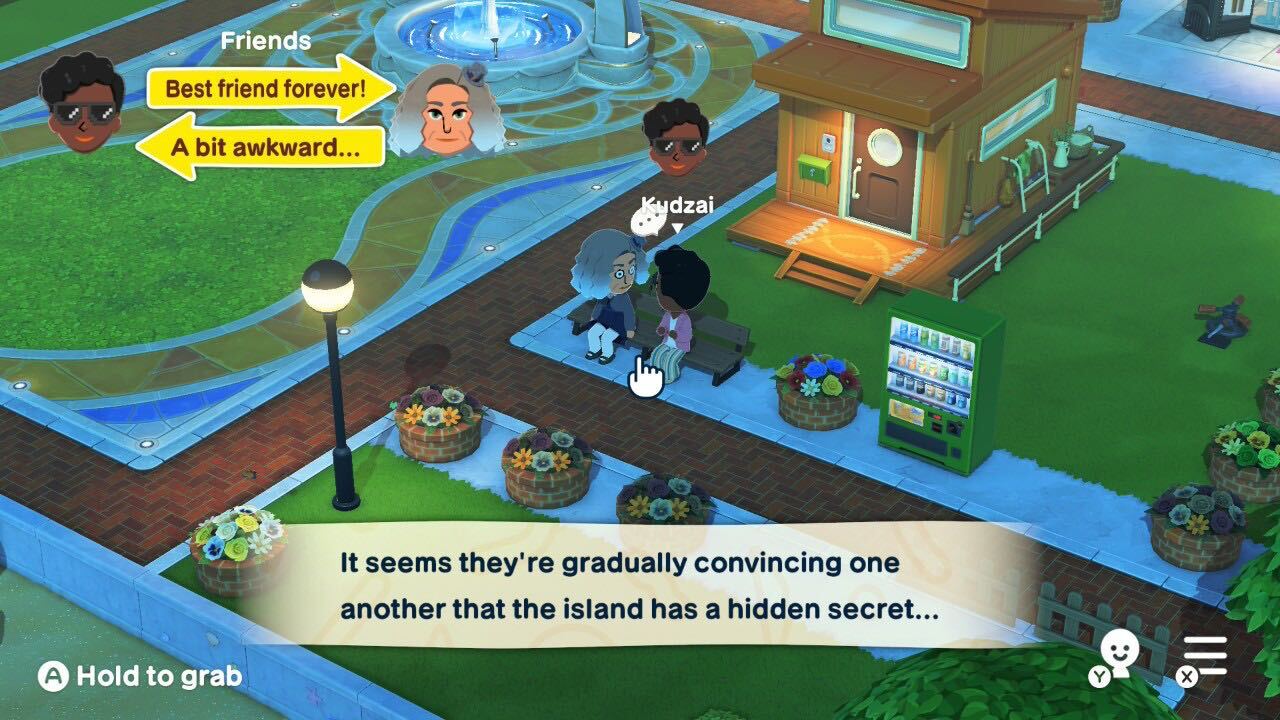
You absolutely can sink many hours into your island, spending your time making Mii’s based on your favourite people or characters. You can come up with new creations and designs to plaster all over the island, making everything to your liking. However, you can never truly control the path of your creations. While you can pick up your Mii by the scruff and place them to interact with whoever or whatever there is around your island, the Mii’s will do their own thing. This isn’t exactly new for Tomodachi Life; you get more out of it once you accept that the Mii’s will do what they do at the end of the day.
This casual approach to island oversight also has the potential to rub people the wrong way. Sure, you want to rank up your island, level up the Mii’s, and unlock whatever you can to help fill out the island. I recommend checking out the demo. As limited as it is, it should give you a taste of what Tomodachi Life actually is. It’s not exactly another Animal Crossing, nor is it The Sims. What it is is a quirky and funny social simulator that can be cute, touching, and very unserious. As a result, Living the Dream is a tricky game to score. Everyone’s islands are their own, your Mii’s will be unique, and you will design the island to your liking. It is also a game that goes on for as little or as many hours as you wish. There are so many foods and clothing items I’ve not come across yet, just as there are plenty of events I haven’t encountered yet.
I played Living the Dream on the Switch 2, with the game already running on the handheld mode at 1080p, similar to the recently patched-in Boost feature for the Switch games on the Switch 2 handheld. Whether it’s on the TV or in handheld, the game looks good and runs well. Given the game is built around Mii’s, it helps that the Mii quality is higher than the previous platforms. Zooming around the island to interact with your Mii’s is quick, and there is never much loading time. The longest I found was when the game wakes out of sleep mode and adjusts the time of day. With the handheld mode, you get the added benefit of being able to do some more accurate designing in the workshop by using the touch screen. I recommend getting an appropriate stylus if you’re big on the customisation options. For Switch 2 users, there are currently no mouse controls.
Tomodachi Life: Living the Dream is a fitting follow-up and upgrade on the previous 3DS game. It’s easy to grow fond of your island of Mii’s and their hot dog-obsessed ways, helping to guide them through the ups and downs of a digital life. There is something for players who want to cover the world with their art and creations, or for players who just want to see what goofy things the Mii residents will get up to next. Tomodachi Life: Living the Dream is much more joyful than the potentially sarcastic saying it is titled after.
Rating: 4/5
Comments